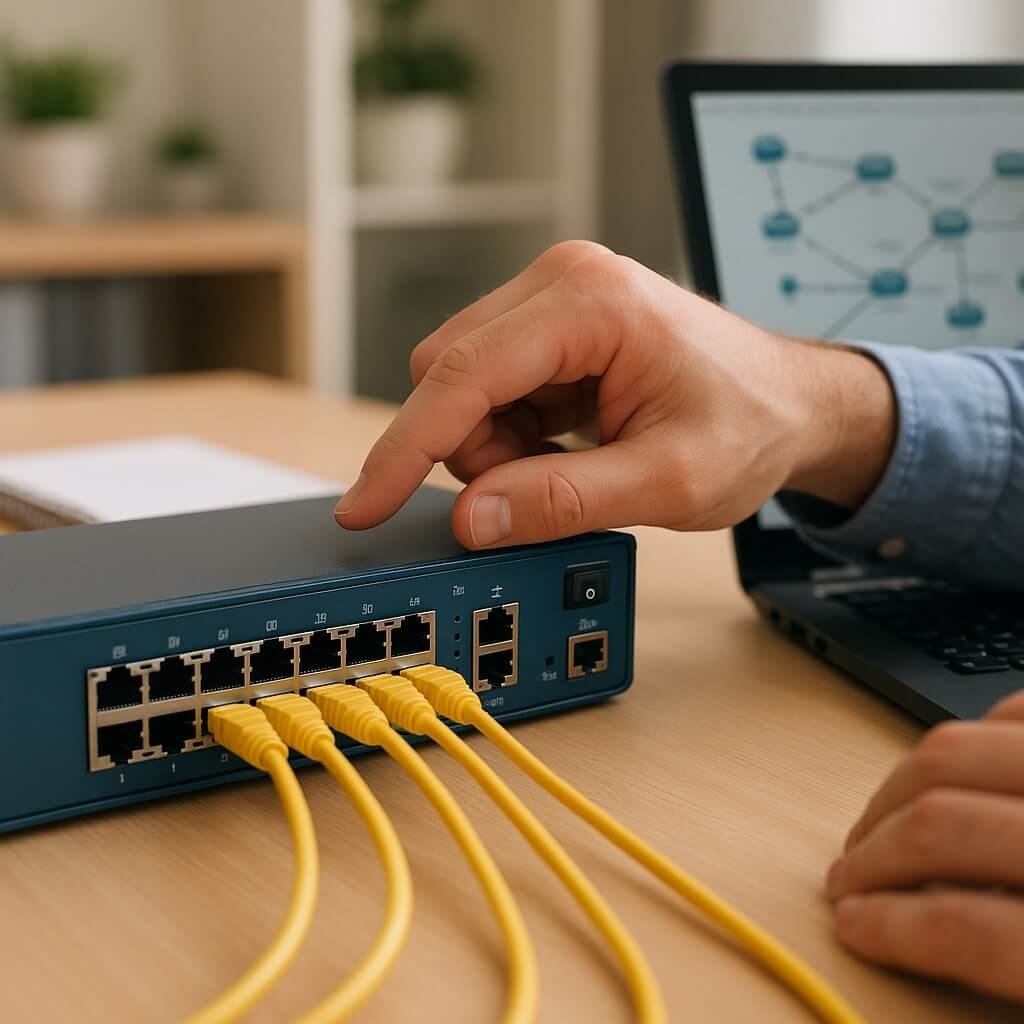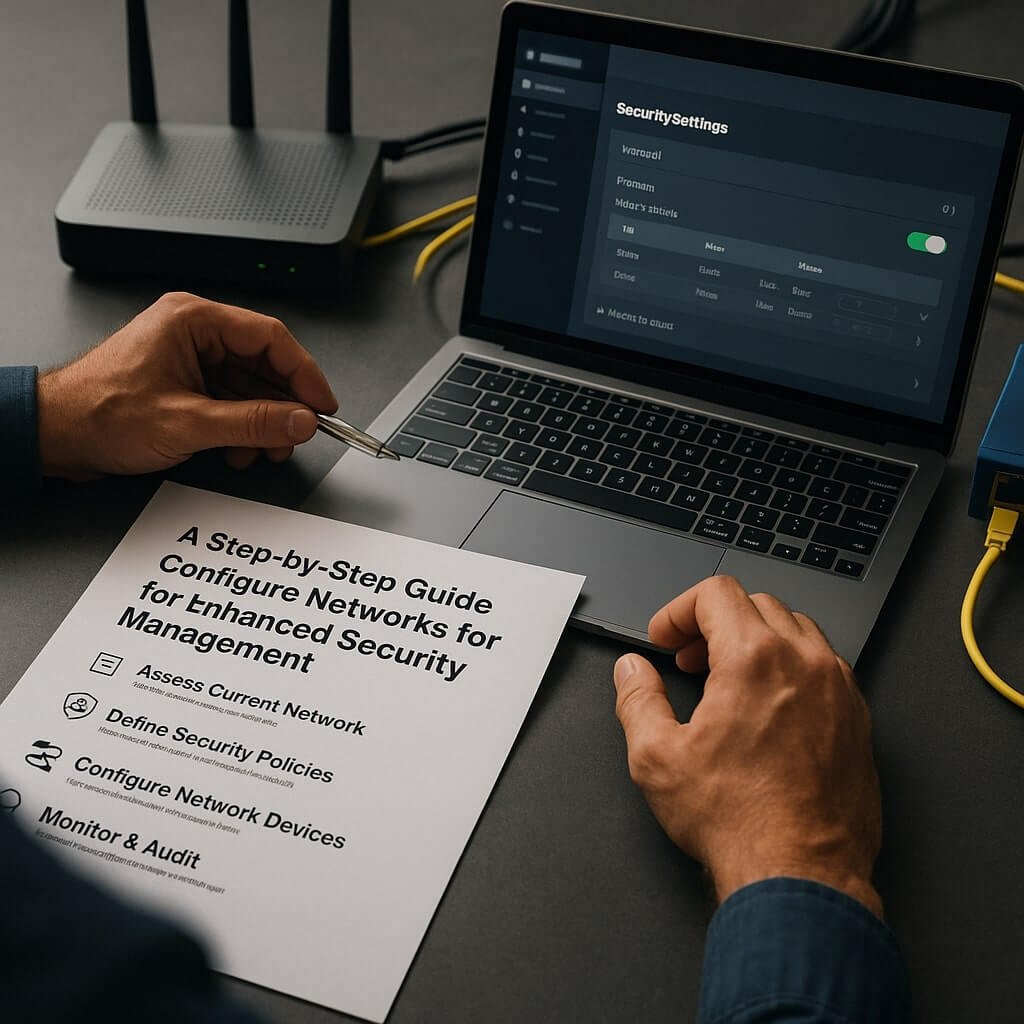
Configuring networks for enhanced security management requires a methodical approach. First, you’ll need to assess your current security posture to identify vulnerabilities and device configurations. From there, implementing strong password policies and network segmentation will substantially reduce risk. However, these are just the initial steps. Understanding how to effectively configure firewalls and intrusion detection systems is essential for a robust defense. Let’s explore these elements in detail to guarantee your network is fortified against evolving threats.
Key Takeaways
- Conduct a thorough network assessment to identify devices, connections, and vulnerabilities before configuring security measures.
- Implement network segmentation to create distinct zones, mitigating risks and controlling access to sensitive information.
- Configure firewalls with clear rules and traffic filtering to block unauthorized access while allowing legitimate traffic.
- Enforce strong password and authentication policies, including multi-factor authentication, to enhance user access security.
- Foster a culture of security awareness and incident reporting among employees to strengthen overall network resilience.
Assessing Your Current Network Security Posture
Before you can enhance your network’s security, you need to evaluate your current security posture. Start with a thorough network assessment, identifying all devices, connections, and potential vulnerabilities.
Utilize scanning tools to detect weaknesses and configurations that may expose your network to threats. Next, conduct a security evaluation, examining your existing policies, procedures, and incident response strategies.
Analyze logs and user access levels to verify they align with your security requirements. Document your findings meticulously, highlighting critical areas needing improvement.
This analytical approach allows you to prioritize actions effectively, making sure you’re addressing the most significant risks first. By understanding your current state, you’ll be better equipped to implement robust security measures tailored to your organization’s needs.
Establishing Strong Password Policies
While you may have a variety of security measures in place, establishing strong password policies is essential for safeguarding your network.
Start by enforcing password complexity requirements, ensuring users create passwords that include a mix of upper and lower case letters, numbers, and special characters. This complexity reduces the risk of unauthorized access.
Enforcing password complexity is crucial; require a mix of letters, numbers, and special characters to enhance security.
Additionally, implement multi-factor authentication (MFA) to add an extra layer of security. MFA requires users to provide two or more verification factors, making it considerably harder for attackers to gain access, even if they’ve a password.
Regularly review and update your password policies to adapt to emerging threats, and educate users on the importance of password security to foster a culture of vigilance within your organization.
Implementing Network Segmentation
Network segmentation is a critical strategy for enhancing security in your organization’s infrastructure. By dividing your network into distinct network zones, you can mitigate risks and contain potential breaches. Each zone should serve a specific function, allowing for tailored security measures.
Implementing access controls within these zones is essential; it guarantees that only authorized users can access sensitive information. Use VLANs (Virtual Local Area Networks) to create logical separations, enforcing policies that limit lateral movement within the network.
Regularly review and update access controls to adapt to evolving threats. By effectively managing your network zones and access controls, you not only enhance security but also improve performance and compliance across your organization.
Configuring Firewalls for Enhanced Protection
After establishing network segmentation, the next line of defense is configuring firewalls to bolster your security posture. Start by defining clear firewall rules that enforce access controls between network zones. Implement traffic filtering to block unauthorized access while allowing legitimate traffic. Optimize your rules regularly based on threat intelligence to adapt to evolving threats. Configure logging settings to monitor and analyze traffic patterns, aiding in security audits and incident response.
Here’s a simple framework to guide your configuration:
| Aspect | Description | Best Practice |
|---|---|---|
| Firewall Rules | Define access permissions | Regularly review and update |
| Traffic Filtering | Block unwanted traffic | Use automated tools for efficiency |
| Logging Settings | Monitor traffic and events | Guarantee logs are retained securely |
| Rule Optimization | Fine-tune firewall rules | Leverage threat intelligence data |
Enabling Intrusion Detection and Prevention Systems
Enabling Intrusion Detection and Prevention Systems (IDS/IPS) is vital for safeguarding your network against unauthorized access and potential threats.
You’ll need to implement configuration best practices to optimize their effectiveness and guarantee they align with your security policies.
Regular monitoring and maintenance of these systems are essential to adapt to evolving threats and maintain robust network security.
Importance of IDS/IPS
Intrusion Detection and Prevention Systems (IDS/IPS) play an important role in safeguarding your network from potential threats. By implementing these systems, you enhance your security posture through effective intrusion detection and robust prevention mechanisms.
Here are three key benefits of IDS/IPS:
- Real-time Monitoring: IDS/IPS continuously analyzes network traffic, identifying suspicious activities as they occur, allowing you to respond promptly.
- Threat Mitigation: With built-in prevention mechanisms, these systems can block malicious traffic and stop potential breaches before they escalate.
- Regulatory Compliance: Utilizing IDS/IPS helps you meet compliance requirements by providing crucial logging and reporting features, ensuring that your organization adheres to industry standards.
Integrating IDS/IPS into your network strategy is essential for thorough security management.
Configuration Best Practices
To effectively enhance your network security, configuring Intrusion Detection and Prevention Systems (IDS/IPS) correctly is essential.
Start by defining clear policies for network access, guaranteeing only authorized users can operate within your environment. Regularly conduct security audits to assess the effectiveness of your IDS/IPS configurations and identify any vulnerabilities.
Utilize signature-based detection for known threats while implementing anomaly-based detection for emerging risks. Tailor your system’s sensitivity to reduce false positives, but maintain a robust alerting mechanism for genuine threats.
Ascertain that your IDS/IPS devices are updated frequently with the latest threat intelligence to respond effectively to new attacks.
Finally, document your configurations and any changes made for accountability and future reference, reinforcing your organization’s security posture.
Monitoring and Maintenance
While maintaining a secure network, regularly monitoring and maintaining your IDS/IPS is essential for effective threat management.
To guarantee peak network performance and swift incident response, follow these steps:
- Update Signatures: Regularly update your intrusion detection and prevention signatures to detect the latest threats effectively.
- Analyze Logs: Continuously analyze logs generated by your IDS/IPS to identify unusual activity that may indicate a breach or attempted attack.
- Adjust Sensitivity: Fine-tune your system’s sensitivity settings to reduce false positives while maintaining the ability to detect genuine threats.
Regularly Updating Software and Firmware
Regularly updating software and firmware is essential for maintaining network security, as vulnerabilities can be exploited by attackers if left unaddressed.
Software patching is a critical component of this process; it involves applying updates that fix security flaws, improving overall system integrity. You should schedule these updates to guarantee they occur consistently, minimizing the window of opportunity for potential breaches.
Firmware updates are equally important, as they enhance hardware functionality and security features. Always verify that your devices support the latest versions before installation.
Conducting Vulnerability Scans and Penetration Testing
Even with updated software and firmware, a network can still harbor vulnerabilities that attackers might exploit. Conducting regular vulnerability assessments is essential for identifying these weaknesses.
You should employ various penetration techniques and security tools to simulate attacks and evaluate your defenses effectively. Here’s a concise approach to get you started:
- Utilize scan automation to identify vulnerabilities quickly and efficiently.
- Implement risk analysis and threat modeling to prioritize threats based on potential impact.
- Adopt diverse test methodologies for thorough coverage, including exploit development to understand how vulnerabilities can be exploited.
Educating Employees on Security Best Practices
Educating employees on security best practices is essential for maintaining a secure network environment.
Regular training sessions can reinforce the importance of security awareness and guarantee that your team stays informed about evolving threats.
Additionally, encouraging the reporting of incidents fosters a proactive culture that can mitigate risks before they escalate.
Importance of Security Awareness
While technical defenses are essential for network security, human behavior often represents the weakest link in the security chain.
Fostering a strong security culture among employees enhances their risk perception and helps mitigate threats.
Here’s why security awareness is vital:
- Empowerment: Educating employees gives them the knowledge to recognize potential threats and respond effectively.
- Preventive Action: Awareness reduces the likelihood of falling victim to phishing attacks or social engineering, safeguarding sensitive data.
- Incident Reporting: When employees understand security protocols, they’re more likely to report suspicious activities promptly.
Regular Training Sessions
To strengthen your organization’s security culture, implementing regular training sessions on security best practices is a must.
Focus on training effectiveness by evaluating skills through interactive sessions that promote employee engagement. Consider increasing training frequency to enhance knowledge retention, ensuring employees are consistently updated on evolving threats.
Use role-playing exercises and case studies based on real-world scenarios to provide practical insights and foster critical thinking. Incorporate feedback mechanisms to gauge understanding and adapt your training approach effectively.
By emphasizing these elements, you’ll not only improve security awareness but also create a proactive environment where employees feel empowered to contribute to your organization’s overall security strategy.
Regular training is essential for cultivating a resilient security posture.
Encouraging Reporting Incidents
Creating a culture that encourages reporting incidents is essential for maintaining a robust security framework.
When employees feel empowered to report suspicious activities, your organization can enhance its incident response capabilities.
Here are three strategies to foster this environment:
- Clear Reporting Channels: Establish straightforward procedures for incident reporting, ensuring employees know how and where to report issues.
- Anonymity Assurance: Provide options for anonymous reporting, reducing fear of retaliation and increasing participation in incident reporting.
- Regular Feedback: Share outcomes of reported incidents with employees to demonstrate the importance of reporting and how it contributes to overall security resilience.
Continuously Monitoring and Reviewing Security Policies
As organizations face an ever-evolving threat landscape, continuously monitoring and reviewing security policies becomes essential for maintaining robust network defenses.
You need to regularly assess policy effectiveness to guarantee they adapt to new vulnerabilities and emerging threats. Conduct compliance audits to verify that your security measures align with industry standards and regulations. This process not only identifies gaps but also promotes accountability within your team.
Implement automated monitoring tools that can provide real-time data on policy adherence, allowing for timely adjustments. By fostering a culture of proactive evaluation, you’ll enhance the resilience of your network against potential breaches.
Regular reviews empower you to stay ahead of threats, ultimately fortifying your organization’s security posture.
Conclusion
By following these steps, you can greatly enhance your network’s security management. Start with a thorough assessment, enforce strong password policies, and segment your network effectively. Configure firewalls and intrusion detection systems while ensuring regular updates to your software. Conduct ongoing vulnerability scans and educate your employees about security best practices. Finally, maintain continuous monitoring and review of your security policies to adapt to evolving threats, ensuring your network remains robust and resilient against potential attacks.