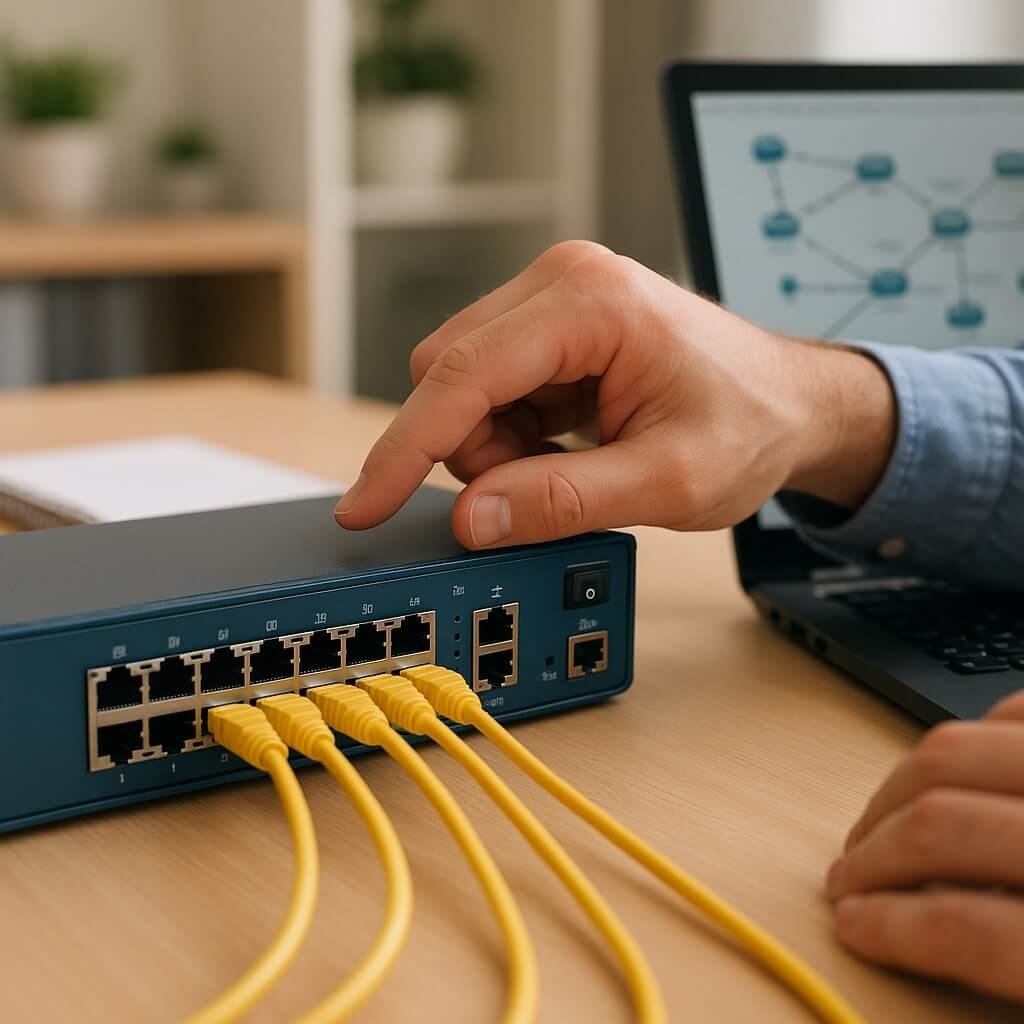
Network perimeter security is your first line of defense against cyber threats, protecting sensitive data and ensuring system integrity. By monitoring and controlling traffic, it identifies vulnerabilities and potential breaches. With the increasing complexity of digital environments and the integration of cloud services, understanding its key components becomes essential. What strategies can you implement to enhance your organization’s defenses and adapt to evolving threats?
Key Takeaways
- Network perimeter security acts as the first line of defense against cyber threats and unauthorized access.
- It involves identifying entry points and maintaining strict control over inbound and outbound traffic.
- Regular vulnerability assessments help uncover potential gaps for exploitation, safeguarding sensitive data.
- The rise of cloud services complicates perimeter security, necessitating robust access controls and monitoring.
- Effective perimeter security combines firewalls, intrusion detection systems, and access control measures for comprehensive protection.
Understanding Network Perimeter Security
As organizations increasingly rely on digital infrastructure, understanding network perimeter security becomes essential to safeguarding sensitive data.
You need to recognize that perimeter security acts as a first line of defense against security threats, which can exploit network vulnerabilities. By analyzing potential entry points, such as firewalls, intrusion detection systems, and access controls, you can identify weaknesses in your network.
Every device connected to your network poses a risk; therefore, maintaining strict control over inbound and outbound traffic is vital. Regular vulnerability assessments help reveal gaps that malicious actors might exploit.
Key Components of Perimeter Security
When securing your network perimeter, understanding key components is vital.
Firewalls and intrusion detection systems form the first line of defense, while effective network segmentation strategies can limit potential threats.
Additionally, implementing robust access control measures guarantees that only authorized users can interact with sensitive data.
Firewalls and Intrusion Detection
Firewalls and intrusion detection systems (IDS) serve as the dual pillars of network perimeter security, each playing a critical role in safeguarding your organization’s digital assets.
Understanding their functions is essential for maintaining robust security.
- Firewall Performance: Evaluates how effectively firewalls filter incoming and outgoing traffic, guaranteeing only legitimate communications pass through.
- Intrusion Detection: Monitors network activity for suspicious behavior, alerting you to potential threats in real time.
- Threat Prevention: Firewalls block unauthorized access, while IDS provides insight into ongoing attacks.
- Response Capabilities: Both systems enable quick mitigation strategies, minimizing damage from security breaches.
Together, these components create a fortified perimeter, enhancing your organization’s resilience against cyber threats.
Prioritizing their implementation guarantees a proactive approach to network security.
Network Segmentation Strategies
Effective network perimeter security extends beyond firewalls and intrusion detection systems; it includes strategic network segmentation. By implementing network isolation techniques, you can limit the spread of potential threats and minimize the attack surface.
This involves creating distinct segments within your network, each with tailored segmentation policies that govern access and communication. For instance, critical systems can be isolated from less secure areas, ensuring that even if a breach occurs, attackers face significant barriers.
Additionally, consider using VLANs or subnets to enforce these segments. Always assess and update your segmentation policies to adapt to emerging threats and evolving business needs, thereby enhancing your overall perimeter security strategy.
Embracing these practices is essential for robust network defense.
Access Control Measures
While many organizations focus on perimeter defenses, access control measures are equally essential in safeguarding network integrity. Implementing robust access policies allows you to define who can access what within your network. This not only mitigates risks but also guarantees that sensitive data is protected.
Key components of effective access control measures include:
- Role-based Access Control (RBAC): Assigns permissions based on user roles, limiting access to necessary resources.
- User Permissions: Tailors access levels to individual users, enhancing security.
- Authentication Mechanisms: Employs multi-factor authentication to validate user identities.
- Regular Audits: Reviews and updates user permissions to adapt to changes in your organization.
The Role of Firewalls in Network Protection
Firewalls serve as a critical line of defense in your network security architecture, filtering traffic and enforcing security policies.
You need to understand the various types of firewalls available, such as stateful, stateless, and next-generation, to effectively tailor your protection strategy.
Furthermore, implementing robust firewall management strategies will guarantee that your defenses remain adaptive and responsive to emerging threats.
Types of Firewalls
In the domain of network security, understanding the various types of firewalls is essential for establishing robust protection against cyber threats.
Firewalls can be categorized based on their configurations and functionalities. Here are some key types you should know:
- Hardware Firewalls: These are physical devices that filter traffic at the network perimeter.
- Software Firewalls: Installed on individual devices, they monitor incoming and outgoing traffic.
- Next Gen Firewalls: These integrate advanced features like intrusion prevention and application awareness.
- Application Firewalls: They specifically filter traffic to and from web applications, enforcing strict firewall policies and rules.
Firewall Management Strategies
Understanding the types of firewalls lays the groundwork for effective firewall management strategies that enhance network protection. You need to prioritize firewall updates and enforce robust security policies to mitigate risks efficiently. Regularly updating your firewalls guarantees they’re equipped to handle emerging threats.
| Strategy | Description | Impact on Security |
|---|---|---|
| Regular Updates | Schedule updates to firewall software | Protects against vulnerabilities |
| Policy Enforcement | Implement strict security policies | Controls access and mitigates threats |
| Monitoring & Logging | Continuously monitor firewall logs | Identifies and responds to anomalies |
Intrusion Detection and Prevention Systems
Intrusion Detection and Prevention Systems (IDPS) play an essential role in safeguarding network environments by actively monitoring traffic for suspicious activities and responding to potential threats.
By employing advanced detection methods, you can identify various intrusion techniques that may compromise your network’s integrity.
Employing advanced detection methods enables the identification of various intrusion techniques that threaten your network’s integrity.
Consider these key aspects of IDPS:
- Real-time monitoring: Continuously analyzes traffic for anomalies.
- Threat response: Automatically takes action against identified threats.
- Data logging: Maintains records for forensic analysis and compliance.
- Integration capabilities: Works in conjunction with other security tools for enhanced protection.
Implementing an effective IDPS not only enhances your network’s defense but also empowers you to respond swiftly to emerging threats, ultimately reducing risk and exposure.
Importance of Virtual Private Networks (VPNs)
While many organizations focus on perimeter defenses, the importance of Virtual Private Networks (VPNs) in securing remote communications can’t be overstated.
VPNs utilize various VPN protocols to establish secure connections, guaranteeing data encryption for sensitive information transmitted over the internet. This encryption not only safeguards online privacy but also enhances network anonymity, making it difficult for cyber threats to intercept your data.
With remote access capabilities, VPNs enable employees to connect securely from different locations while maintaining bandwidth management for peak performance. Additionally, robust user authentication processes confirm that only authorized personnel access the network.
Fundamentally, VPNs are essential for establishing secure connections that protect your organization’s data integrity and confidentiality in an increasingly remote work environment.
Access Control Measures and Authentication
Effective access control measures and authentication strategies are critical for safeguarding sensitive data and guaranteeing that only authorized users can access network resources.
Implementing robust access management practices enhances security by leveraging various authentication protocols. Here are key components to evaluate:
- Role-Based Access Control (RBAC): Grants permissions based on user roles, minimizing unnecessary access.
- Multi-Factor Authentication (MFA): Requires multiple verification methods, adding layers of security.
- Single Sign-On (SSO): Simplifies user access while maintaining strong authentication processes.
- Regular Audits and Reviews: Guarantees compliance and identifies unauthorized access attempts.
The Impact of Cloud Services on Perimeter Security
As organizations increasingly adopt cloud services, the landscape of perimeter security undergoes significant changes. Traditional perimeter defenses face new challenges as data and applications migrate to the cloud.
You must recognize that cloud security involves a shared responsibility model, which complicates your security posture. The boundaries of your network are no longer confined to a physical location, making it essential to implement robust access controls and continuous monitoring.
Additionally, the dynamic nature of cloud environments introduces vulnerabilities, such as misconfigurations and inadequate identity management. These perimeter challenges necessitate a reevaluation of your security strategies, focusing on adaptive measures that can effectively safeguard against evolving threats while ensuring compliance and data integrity in a cloud-centric world.
Best Practices for Enhancing Perimeter Security
Implementing a robust perimeter security strategy is essential for any organization aiming to protect its digital assets.
To enhance your perimeter security, consider the following best practices:
- Conduct regular security audits to identify vulnerabilities and guarantee compliance.
- Perform thorough perimeter assessments to evaluate the effectiveness of existing defenses.
- Utilize advanced firewalls and intrusion detection systems to monitor and filter traffic.
- Train employees on security protocols to mitigate risks posed by social engineering.
Conclusion
In today’s complex digital landscape, effective network perimeter security is non-negotiable. By leveraging robust firewalls, intrusion detection systems, and VPNs, you can greatly mitigate risks and protect sensitive data. It’s vital to continuously adapt your security measures in response to evolving threats, especially with the rise of cloud services. Implementing best practices and maintaining strict access controls not only enhances your organization’s defenses but also guarantees compliance and safeguards your critical digital assets from unauthorized access.