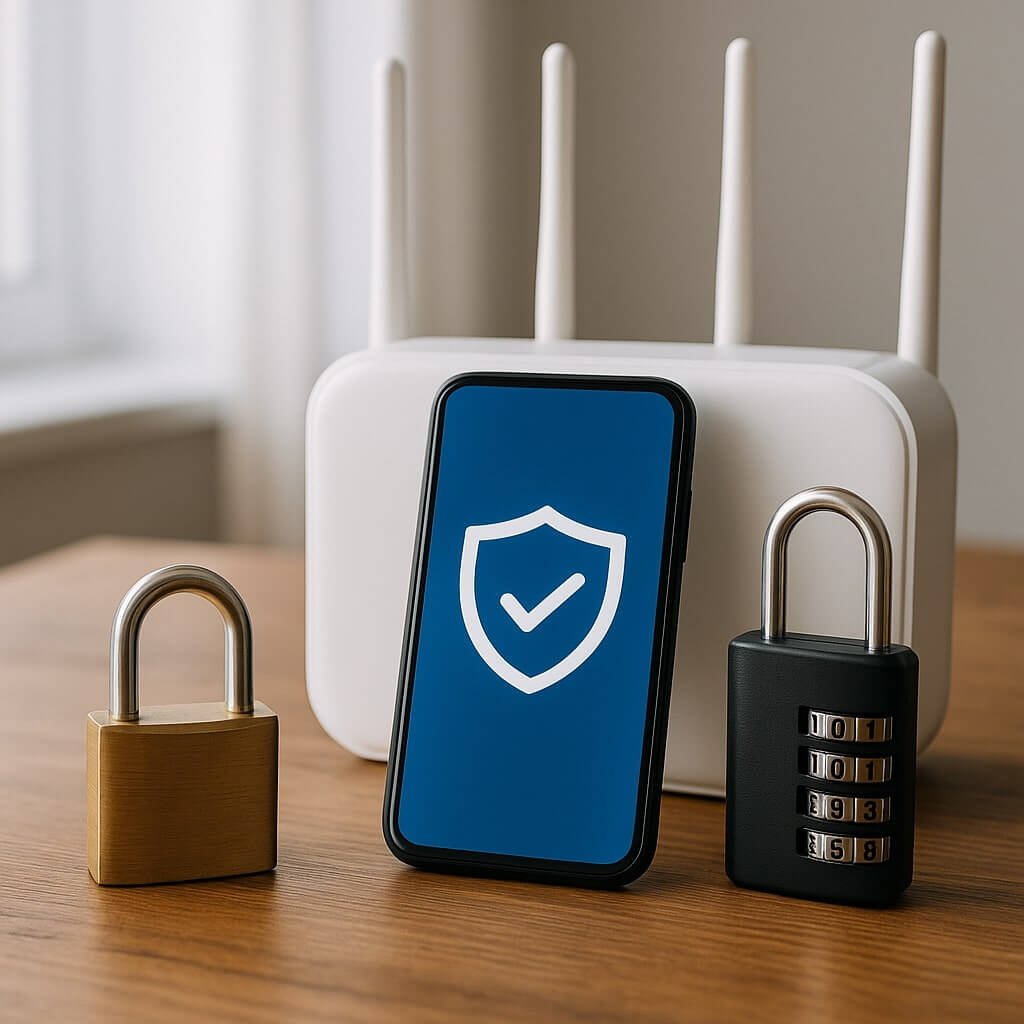
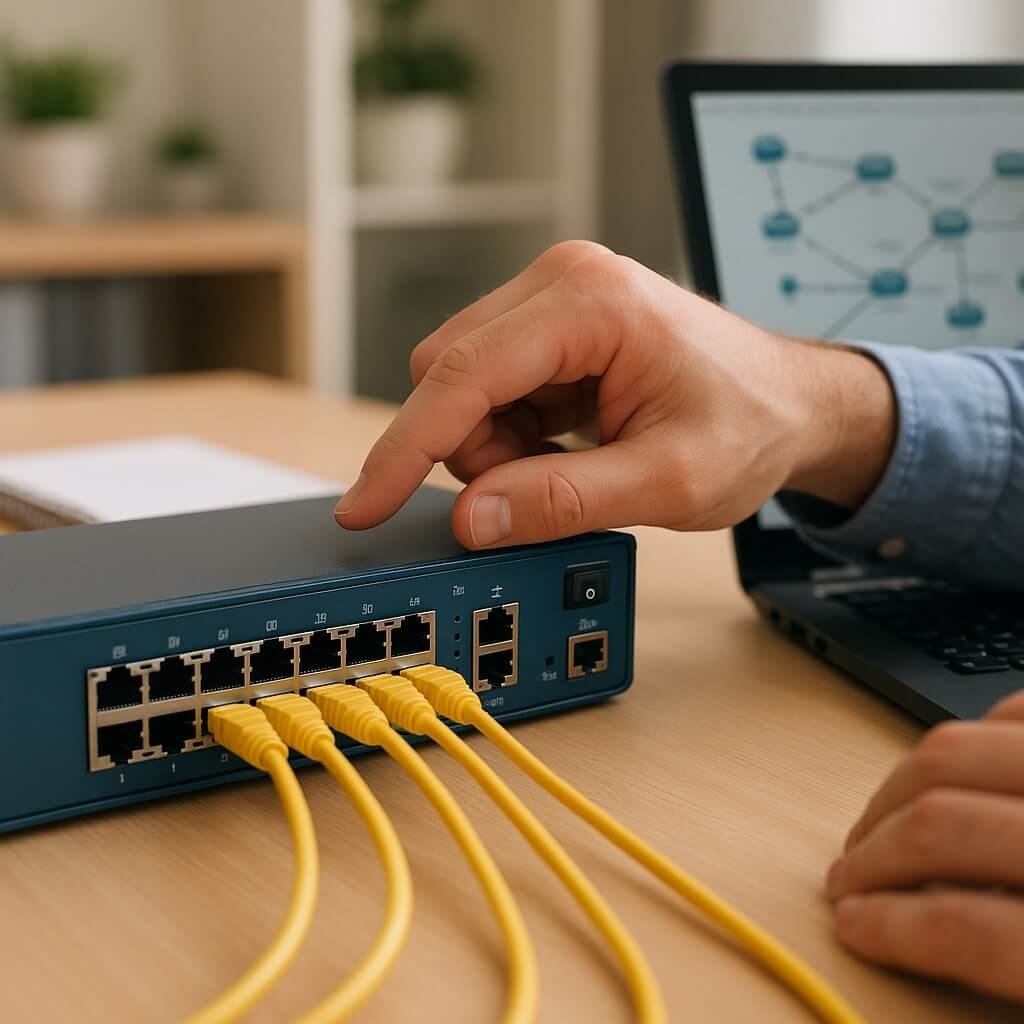
When you consider the security landscape for networks, it’s crucial to grasp the various protocols that protect data integrity and confidentiality. Protocols like SSL/TLS and IPsec play pivotal roles in securing communications, while wireless standards such as WPA and WPA2 safeguard against unauthorized access. Understanding these mechanisms is imperative, especially as emerging technologies like quantum encryption and blockchain security redefine the boundaries of network defense. What implications do these innovations have for your security strategies?
Key Takeaways
- SSL/TLS protocols provide encryption for secure data transmission, enhancing confidentiality and integrity in communications.
- IPsec secures IP packets through authentication and encryption, ensuring data integrity and confidentiality over networks.
- Wireless security protocols like WPA and WPA2 protect network integrity and user data with advanced encryption methods.
- Authentication protocols, including multi-factor and certificate-based mechanisms, establish trust by verifying user identities and managing credentials.
- VPNs encrypt data and mask IP addresses, safeguarding online activities and enhancing privacy in various use cases.
Understanding Network Security Protocols
As you explore network security protocols, it’s essential to understand their fundamental role in safeguarding data and maintaining integrity across digital communications.
These protocols provide frameworks that mitigate network vulnerabilities, ensuring secure transmission of information. They encompass various standards, such as SSL/TLS for encrypting data in transit and IPsec for securing internet protocol communications.
Regular security audits are vital to identify potential weaknesses and verify compliance with established protocols. By evaluating configurations and monitoring traffic, you can pinpoint vulnerabilities before they’re exploited.
Understanding the nuances of these protocols allows you to implement robust security measures tailored to your network, ultimately enhancing the resilience of your digital infrastructure against evolving threats.
The Importance of Encryption
While many aspects of network security are crucial, encryption stands out as a cornerstone in protecting sensitive data from unauthorized access. By employing robust encryption methods, you guarantee that data remains confidential, even if intercepted during transmission.
Techniques like AES, RSA, and TLS provide varying levels of security, tailored to specific needs. Utilizing these methods effectively fortifies your network against eavesdropping and data breaches.
Additionally, encryption not only secures data at rest but also protects it in transit, making it fundamental for compliance with regulations like GDPR and HIPAA.
Encryption safeguards data both at rest and in transit, ensuring compliance with vital regulations like GDPR and HIPAA.
In an era where cyber threats are increasingly sophisticated, prioritizing encryption is imperative for thorough data protection, safeguarding both your organization and its stakeholders from potential vulnerabilities.
Authentication Protocols and Their Role
Authentication protocols are essential for establishing trust within a network, ensuring that only authorized users can access sensitive resources. They utilize various authentication mechanisms to verify user identities, which is vital for effective credential management. By implementing robust protocols, you minimize the risk of unauthorized access and potential breaches.
Here’s a comparison of common authentication mechanisms:
| Mechanism | Description |
|---|---|
| Password-Based | Users enter a secret password for access. |
| Biometric | Uses physical attributes (e.g., fingerprints). |
| Token-Based | Issues a token after successful login. |
| Multi-Factor | Combines two or more verification methods. |
| Certificate-Based | Utilizes digital certificates for verification. |
Understanding these mechanisms helps you choose the right approach for your network’s security needs, enhancing both user experience and data protection.
Secure Socket Layer (SSL) and Transport Layer Security (TLS)
Understanding the fundamentals of Secure Socket Layer (SSL) and its successor, Transport Layer Security (TLS), is essential for securing network communications.
You’ll find that SSL provides a basic framework for encryption, while TLS enhances security with improved algorithms and features.
Implementing these protocols effectively requires adherence to best practices to guarantee robust data protection.
SSL Basics Explained
SSL, or Secure Socket Layer, along with its successor TLS (Transport Layer Security), forms the backbone of secure communications over the internet. Understanding the intricacies of SSL is crucial for optimizing SSL performance and mitigating SSL vulnerabilities. During the SSL handshake, the client and server establish a secure connection, exchanging SSL certificates to authenticate each other.
| Aspect | Description | Importance |
|---|---|---|
| SSL Handshake | The process of establishing a secure connection | Guarantees secure communication |
| SSL Certificates | Digital certificates for authentication | Verifies identity |
| SSL Vulnerabilities | Weaknesses in the protocol | Potential security risks |
| Performance Factors | Latency and resource consumption | Affects user experience |
| Encryption Methods | Symmetric and asymmetric encryption | Guarantees data confidentiality |
TLS Enhancements Overview
While many still rely on SSL for secure communications, TLS brings substantial enhancements that address the limitations of its predecessor.
One major improvement is its robust tls versioning strategies, which facilitate backward compatibility while ensuring users benefit from the latest security features. This is essential as it allows organizations to shift smoothly without disrupting existing services.
Additionally, TLS incorporates advanced tls performance optimization techniques, such as session resumption and reduced round-trip times, greatly improving connection speeds.
These enhancements not only bolster security but also enhance user experience by minimizing latency.
As you consider adopting TLS, understanding these advancements will help you leverage its capabilities for more secure and efficient network communications.
Implementation Best Practices
Adopting TLS for secure communications requires a clear strategy for implementation to maximize its benefits and minimize vulnerabilities.
Start by developing a robust security policy that incorporates regular risk assessments and aligns with compliance standards. Conduct thorough security audits to identify gaps and guarantee adherence to best practices.
Implement threat modeling to anticipate potential attacks and establish access control measures to restrict unauthorized access. Network segmentation can further enhance security by isolating sensitive data.
Regular vulnerability management is essential; continuously monitor and patch systems to mitigate risks.
Finally, maintain a well-structured incident response plan and foster security awareness among employees to guarantee everyone understands their role in maintaining a secure environment.
These practices will help you optimize TLS’s effectiveness.
Internet Protocol Security (IPsec)
Internet Protocol Security (IPsec) serves as a critical framework for securing Internet Protocol communications by authenticating and encrypting each IP packet in a communication session. Its robust IPSec configurations allow you to customize security levels based on network requirements.
Here’s a quick overview of the key IPSec benefits:
| Benefit | Description | Emotional Impact |
|---|---|---|
| Data Integrity | Guarantees data remains unchanged during transit | Trust and assurance |
| Confidentiality | Protects sensitive information from eavesdroppers | Security and peace of mind |
| Authentication | Validates sender identity | Confidence in communication |
| Access Control | Restricts unauthorized access | Control and empowerment |
| Flexible Deployment | Adapts to various network architectures | Adaptability and resilience |
Wireless Security Protocols: WPA and WPA2
When you consider wireless security, it’s essential to understand the foundational elements of WPA and its successor, WPA2.
WPA introduces key features like TKIP for dynamic key management, while WPA2 enhances security with AES encryption and improved authentication methods.
Analyzing these protocols reveals significant advancements in protecting network integrity and user data.
WPA Overview and Features
As wireless networks have become ubiquitous, understanding the security protocols that protect them is essential.
Wi-Fi Protected Access (WPA) was developed to address vulnerabilities in the original WEP protocol, providing enhanced WPA security through stronger encryption and authentication methods.
One of the key WPA features is Temporal Key Integrity Protocol (TKIP), which dynamically generates a new encryption key for each packet, reducing the risk of key reuse attacks.
Additionally, WPA supports 802.1X for robust user authentication, allowing organizations to implement a centralized authentication server.
This combination of features guarantees that wireless communication remains secure, making WPA a notable step forward in wireless security.
WPA2 Security Enhancements
While WPA considerably improved wireless security, WPA2 took these enhancements further by implementing the Advanced Encryption Standard (AES) for encryption, which offers stronger protection against unauthorized access.
The key WPA2 improvements include the introduction of the Counter Mode with Cipher Block Chaining Message Authentication Code Protocol (CCMP), enhancing both data integrity and confidentiality. Additionally, WPA2 mandates robust authentication methods, reducing the risk of unauthorized network access.
However, it’s essential to recognize WPA2 vulnerabilities, such as the KRACK attack, which exploits weaknesses in the four-way handshake process.
Virtual Private Networks (VPNs)
Virtual Private Networks (VPNs) play an essential role in safeguarding your online activities and data privacy. There are various VPN types, including remote access and site-to-site, each serving unique use cases.
The benefits of using a VPN are substantial, as they enhance VPN security by encrypting your data and masking your IP address. Different VPN protocols, like OpenVPN and IKEv2, impact overall VPN performance and security levels.
However, be aware of VPN risks such as data leaks or inadequate configurations, which can compromise your privacy. Proper VPN configurations maximize security and performance, ensuring a reliable connection.
Ultimately, understanding these aspects will help you select the right VPN solution for your needs.
Future Trends in Network Security Protocols
The landscape of network security protocols is evolving rapidly in response to emerging threats and technological advancements.
You’ll notice a significant shift towards quantum encryption, which leverages the principles of quantum mechanics to provide unbreakable security. This advancement is essential as traditional encryption methods become increasingly vulnerable to quantum computing.
Additionally, blockchain security is gaining traction, offering decentralized, tamper-proof solutions for data integrity and authentication. By integrating smart contracts and cryptographic keys, organizations can enhance their security framework against cyberattacks.
As these technologies mature, you’ll need to stay informed and adapt your security protocols to harness their potential, ensuring robust protection for your network infrastructure in an ever-changing digital landscape.
Conclusion
In summary, understanding key network security protocols is essential for protecting sensitive information and maintaining data integrity. By implementing SSL/TLS, IPsec, and wireless security standards like WPA and WPA2, you can establish robust defenses against potential threats. Additionally, utilizing VPNs not only encrypts your data but also masks your IP address for enhanced anonymity. As technology evolves, staying informed about emerging trends like quantum encryption and blockchain security will be vital for fortifying your network against increasingly sophisticated attacks.