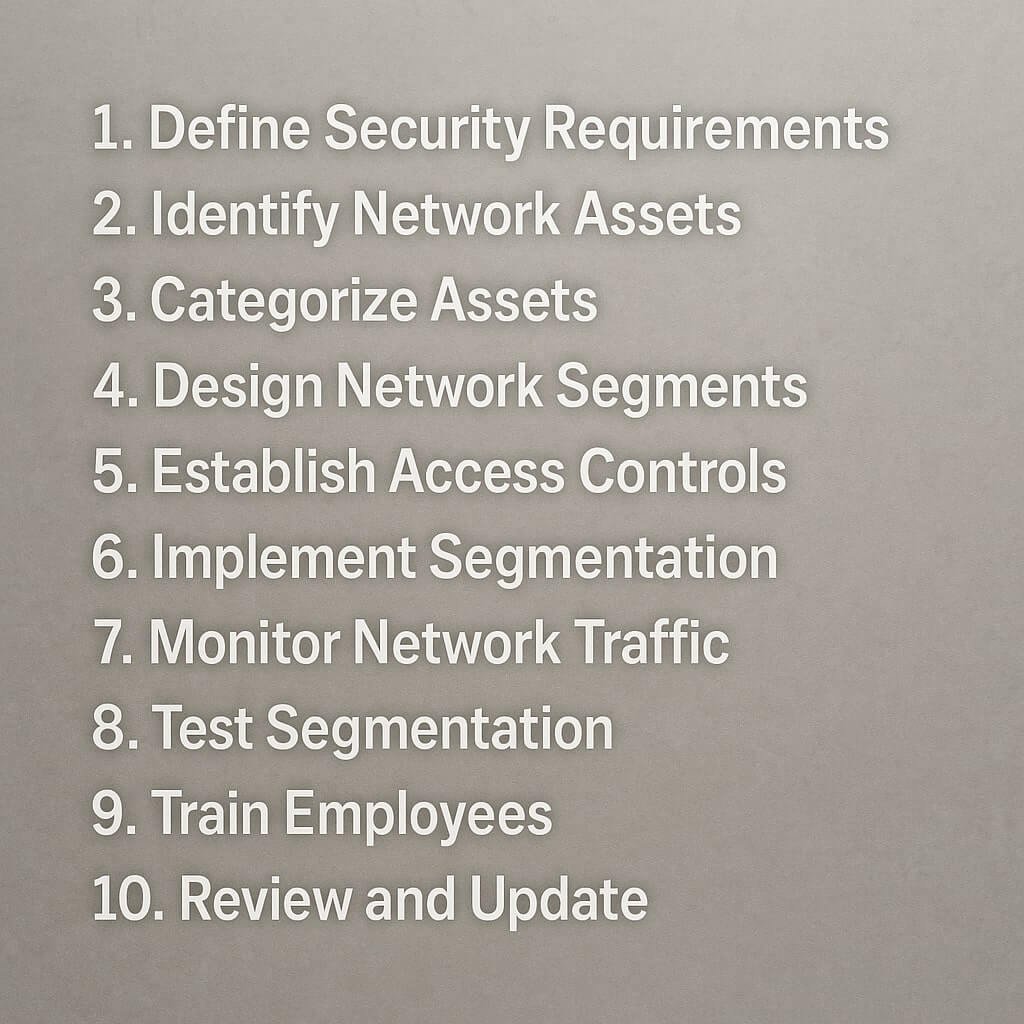

In today’s complex digital landscape, understanding how to effectively implement threat modeling for network security is essential. You’ll need to start by identifying your critical assets and mapping out your network architecture. Then, you can recognize potential threats and assess vulnerabilities. But this is just the beginning. What comes next could determine the resilience of your security framework against evolving threats.
Key Takeaways
- Begin by creating a comprehensive inventory of assets, including hardware, software, and critical personnel essential for operations.
- Classify and prioritize assets based on sensitivity and importance to focus on high-value targets during threat modeling.
- Identify potential threats and evaluate vulnerabilities by assessing various threat vectors and their likelihood and impact on critical assets.
- Develop and implement robust mitigation strategies aligned with organizational security policies, utilizing appropriate security controls and access restrictions.
- Establish continuous monitoring and perform regular security audits to refine threat modeling processes and adapt to emerging security challenges.
Understanding Threat Modeling
Threat modeling is a critical process in network security that helps you identify, evaluate, and prioritize potential threats to your systems. It begins with threat classification, where you categorize threats based on their nature, such as external attacks, insider threats, or system vulnerabilities. This classification allows you to understand the landscape of risks your network faces.
Following this, you’ll perform a risk assessment, quantifying the likelihood and impact of each identified threat. By analyzing these factors, you can allocate resources effectively to mitigate risks. You’ll also identify the most critical vulnerabilities that need immediate attention.
Implementing this structured approach not only enhances your network security posture but also enables you to proactively address emerging threats.
Identifying Assets and Resources
Identifying assets and resources is fundamental to effective threat modeling in network security.
Identifying assets and resources is crucial for successful threat modeling in network security.
You need to create a thorough resource inventory and perform asset classification to guarantee that every valuable element is accounted for. Failing to recognize these can lead to missed vulnerabilities.
Here are three steps to guide you:
- Catalog Assets: List all hardware, software, data, and personnel that are critical to your network’s operations.
- Classify Assets: Determine the sensitivity and importance of each asset, categorizing them into tiers based on risk and impact.
- Prioritize Resources: Focus on high-value assets first, as they’re more likely to be targeted by threats.
Mapping the Network Architecture
To effectively map your network architecture, you’ll need to identify all network components, including routers, switches, and firewalls.
Understanding how data flows between these elements is essential for spotting vulnerabilities and potential attack vectors.
Identify Network Components
A thorough understanding of your network architecture is essential for effective security measures. Identifying network components involves a detailed assessment of various elements that comprise your system.
To streamline this process, consider focusing on the following:
- Network Devices: Catalog all routers, switches, firewalls, and servers, guaranteeing you maintain updated device inventories.
- Security Zones and Access Controls: Define security zones based on asset classification, assuring appropriate access controls are implemented to safeguard sensitive data transmission.
- System Interconnections and Communication Protocols: Examine how devices interact, noting communication protocols and network segmentation to identify potential vulnerabilities.
This structured approach guarantees you have an all-encompassing view of your network, facilitating targeted security measures.
Visualize Data Flow
Mapping the network architecture helps you visualize data flow, allowing for a clearer understanding of how information moves through your system. Utilizing data visualization techniques, you can create flow diagrams that depict the paths data takes, highlighting critical components and interactions. This clarity aids in identifying potential vulnerabilities.
| Component | Description |
|---|---|
| Data Sources | Where data originates |
| Data Pathways | Routes data takes |
| Endpoints | Final destinations |
Recognizing Potential Threats
While evaluating network security, recognizing potential threats is essential for developing effective defense strategies.
Evaluating network security requires identifying potential threats to create robust defense strategies.
You need to be aware of various threat vectors that can compromise your network. Here are three key threats to evaluate:
- Social Engineering: Attackers manipulate individuals into divulging confidential information, often through phishing emails or deceptive phone calls.
- Insider Threats: Employees or contractors may intentionally or unintentionally compromise security, either by misusing access or failing to follow protocols.
- Malware Attacks: Malicious software can infiltrate your network, leading to data breaches or system disruptions.
Assessing Vulnerabilities
To effectively assess vulnerabilities, you must first identify your critical assets and understand their importance to your network.
Next, evaluate potential threat scenarios that could exploit these assets, taking into account both external and internal risks.
This structured approach will help you prioritize vulnerabilities and implement targeted security measures.
Identifying Critical Assets
Identifying critical assets within your network is essential for effective vulnerability assessment.
To conduct a thorough asset classification and valuation, you should focus on the following:
- Data Repositories: Identify sensitive data, including customer information and intellectual property, which, if compromised, could lead to significant business impact.
- Network Infrastructure: Evaluate the hardware and software components that support your network operations; these are crucial for maintaining service continuity.
- User Access Points: Assess accounts and permissions associated with your staff; unauthorized access could expose critical assets to threats.
Evaluating Threat Scenarios
How can you systematically evaluate potential threats to your network?
Begin by conducting a thorough scenario analysis, which allows you to assess various threats within your specific threat landscape. Identify potential attack vectors that could exploit vulnerabilities in your network architecture.
For each scenario, consider the likelihood of occurrence and the potential impact on your critical assets. Utilize tools like risk matrices to prioritize these threats based on their severity.
Don’t forget to factor in the evolving nature of the threat landscape, as new vulnerabilities may emerge over time. Regularly revisiting and updating your scenarios will guarantee your threat model remains relevant and effective, ultimately enhancing your network’s resilience against potential attacks.
Prioritizing Risks
As you assess potential threats to your network, prioritizing risks becomes essential for effective resource allocation. This process hinges on a thorough risk assessment and impact analysis, allowing you to focus on the most significant vulnerabilities.
Here are three steps to help you prioritize risks:
- Identify Critical Assets: Determine which assets are crucial to your operations and their potential impact if compromised.
- Evaluate Likelihood: Assess the probability of each threat materializing, considering historical data and current vulnerabilities.
- Determine Impact: Analyze the potential consequences of each risk on your organization’s reputation, finances, and operations.
Developing Mitigation Strategies
To effectively safeguard your network, developing robust mitigation strategies is essential after prioritizing risks.
Start by identifying the vulnerabilities associated with each prioritized risk. You’ll want to assess the potential impact and likelihood of each threat, allowing you to tailor your risk mitigation efforts accordingly.
Next, consider multiple strategy development approaches, such as implementing redundancy, applying access controls, or enhancing monitoring systems.
Make certain your strategies align with your organization’s overall security posture and compliance requirements.
Regularly review and update these strategies to adapt to emerging threats and changes in your network environment.
Implementing Security Controls
After establishing robust mitigation strategies, the next step involves implementing security controls that effectively address identified vulnerabilities.
You’ll want to guarantee that your controls align with your security policy and are assessed for control effectiveness. Here’s a concise approach:
- Access Control: Implement role-based access controls to limit data exposure only to authorized users, bolstering your overall security posture.
- Network Security Appliances: Deploy firewalls and intrusion detection systems to monitor and filter malicious traffic, providing an essential barrier against threats.
- Encryption: Utilize strong encryption protocols for sensitive data in transit and at rest, guaranteeing confidentiality and integrity.
Continuous Monitoring and Improvement
While security controls are essential, they must be complemented by continuous monitoring and improvement to adapt to evolving threats.
Implement ongoing assessments to gauge the effectiveness of your security measures. Establish feedback loops that allow you to refine adaptive strategies based on real-time data and emerging vulnerabilities.
Utilize performance metrics to track compliance and identify areas for process optimization. Regular security audits are critical; they provide insights into potential weaknesses and inform your incident response plans.
By integrating these elements, you create a robust framework that not only reacts to incidents but also anticipates them, ensuring your network security remains resilient against future threats.
Embrace this proactive approach for a sustainable security posture.
Conclusion
To summarize, effectively implementing threat modeling for network security requires a structured approach that prioritizes asset identification and risk evaluation. By recognizing potential threats and evaluating vulnerabilities, you can develop targeted mitigation strategies and implement robust security controls. Continuous monitoring and regular audits are essential to adapt your security posture to evolving threats. This proactive strategy not only safeguards your critical resources but also fosters a culture of security awareness throughout your organization, ultimately enhancing your overall security framework.