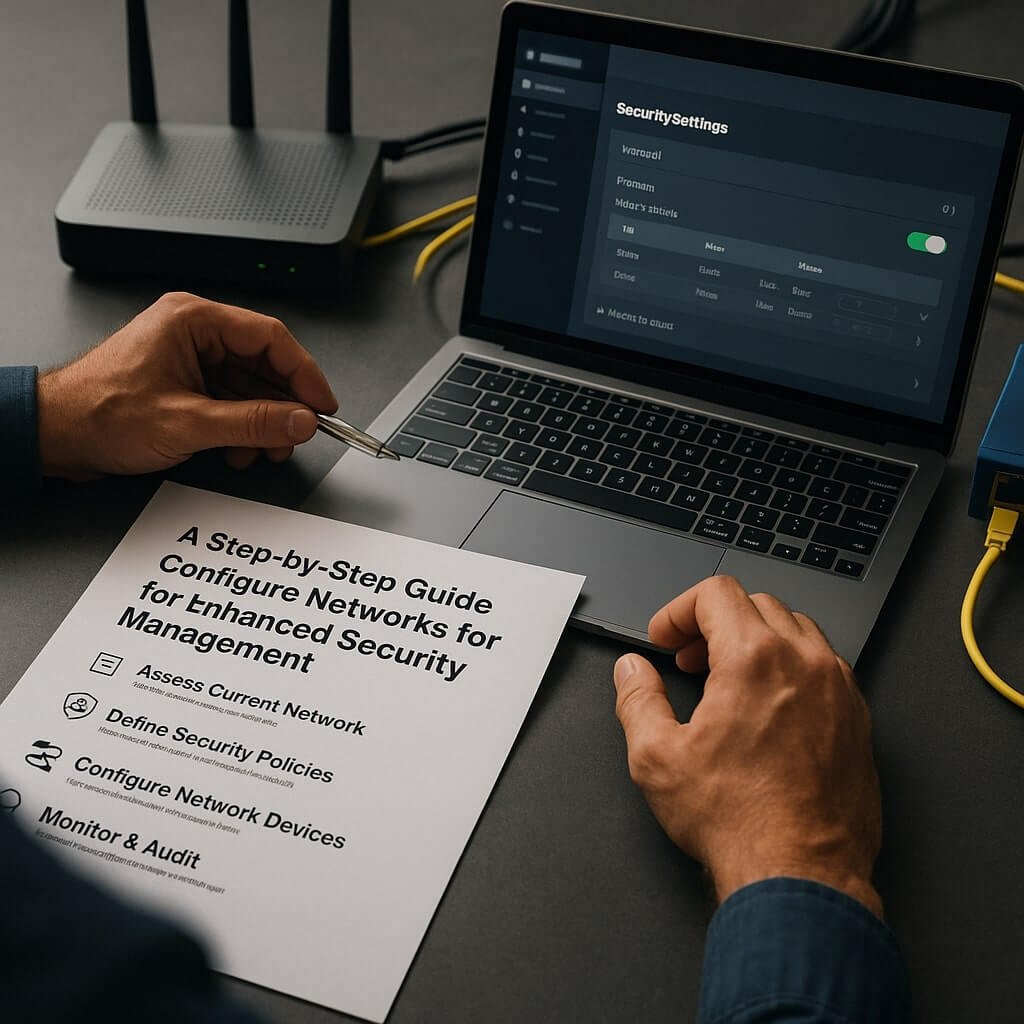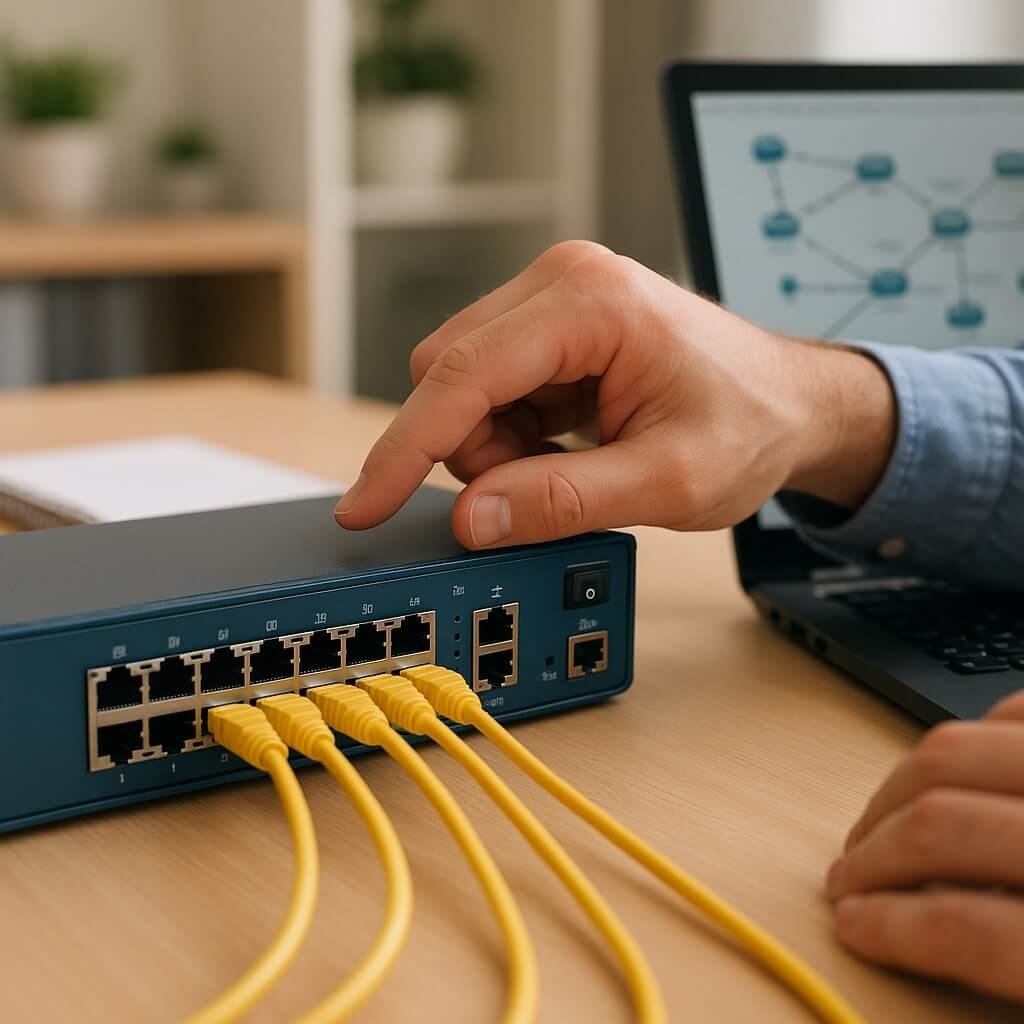
When configuring a secure network, it’s crucial to start with a clear understanding of your current security posture. You’ll need to systematically assess vulnerabilities and implement robust frameworks for guidance. Strong authentication and encryption methods are non-negotiable. However, the process doesn’t end there; ongoing updates and monitoring are essential. Explore how each step contributes to a resilient network and what best practices can safeguard your infrastructure against evolving threats.
Key Takeaways
- Assess and identify network vulnerabilities using techniques like penetration testing and automated scanning tools to establish a baseline security posture.
- Implement strong authentication measures, including Multi-Factor Authentication (MFA) and robust encryption protocols like WPA3 for wireless networks.
- Develop and maintain comprehensive security policies and protocols that align with frameworks such as NIST and ISO to manage risks effectively.
- Establish a structured incident response plan that includes clear protocols for detection, containment, and resolution of security incidents.
- Conduct regular security drills and update training to ensure personnel are prepared for incidents and aware of emerging threats and vulnerabilities.
Understanding Network Security Fundamentals
When you explore network security fundamentals, you quickly realize that understanding the core principles is essential for safeguarding your data and infrastructure.
Network threats constantly evolve, making it important to identify potential vulnerabilities within your systems. By familiarizing yourself with various types of threats—such as malware, phishing, and denial-of-service attacks—you can better prepare to defend against them.
Understanding and identifying evolving network threats like malware and phishing is crucial for effective defense strategies.
Moreover, integrating robust security frameworks into your network design is critical. Frameworks like NIST and ISO provide structured approaches to managing security risks effectively.
They help you establish policies, protocols, and controls that mitigate exposure to threats, ensuring a thorough security posture. By combining awareness of network threats with the implementation of security frameworks, you enhance your network’s resilience against potential attacks.
Assessing Your Current Network Security Posture
To effectively assess your current network security posture, you need to implement vulnerability assessment techniques that identify potential weaknesses.
Simultaneously, reviewing your network security policies guarantees they align with best practices and current threats.
This dual approach enables you to pinpoint deficiencies and enhance your overall security framework.
Vulnerability Assessment Techniques
Identifying vulnerabilities in your network is essential for maintaining a robust security posture. You need to employ various assessment techniques to effectively pinpoint weaknesses.
Here are three key methods:
- Penetration Testing: Simulate real-world attacks to identify exploitable vulnerabilities. This hands-on approach helps you understand how an attacker might breach your defenses.
- Threat Modeling: Analyze potential threats based on your network architecture. By prioritizing risks, you can focus on the most critical vulnerabilities that could impact your assets.
- Automated Scanning Tools: Utilize software solutions to scan your network for known vulnerabilities. These tools provide a quick overview but should complement manual assessments for thoroughness.
Incorporating these techniques will enhance your ability to secure your network effectively.
Network Security Policies Review
How well do your current network security policies protect against evolving threats? To assess your network security posture, start by reviewing your policy enforcement mechanisms.
Verify they align with industry standards and address recent threat vectors. Conduct compliance auditing regularly to validate adherence to these policies and identify gaps. This process not only reveals weaknesses but also helps you adapt your strategies to counteract new risks.
Analyze incident response times and the effectiveness of current protocols; they should evolve alongside emerging threats. Engage stakeholders to verify that everyone understands their roles in maintaining security.
Implementing Strong Authentication Mechanisms
Strong authentication mechanisms are critical in fortifying your network against unauthorized access and data breaches.
Strong authentication measures are essential for protecting your network from unauthorized access and data breaches.
To enhance security, implement the following strategies:
- Multi-Factor Authentication (MFA): Require users to provide two or more verification factors to access sensitive systems, combining something they know (password) with something they’ve (token) or something they’re (biometric verification).
- Biometric Verification: Utilize fingerprint scanning, facial recognition, or iris scans as a robust method of verifying identity, enhancing security beyond traditional passwords.
- Regular Updates and Audits: Periodically review and update authentication protocols to address emerging threats and vulnerabilities.
Configuring Firewalls and Intrusion Detection Systems
While configuring firewalls and intrusion detection systems (IDS) is essential for securing your network, understanding the specific needs of your environment is equally important. You must implement clear firewall rules to control traffic effectively and guarantee that your IDS is capable of intrusion prevention.
| Component | Action Needed |
|---|---|
| Firewall | Define specific rules |
| IDS | Set up alert thresholds |
| Traffic Monitoring | Analyze patterns |
| Logging | Enable detailed logs |
| Regular Updates | Patch vulnerabilities |
Securing Wireless Networks
To secure your wireless networks, start by choosing strong encryption protocols like WPA3, which offer enhanced protection against unauthorized access.
Regularly updating your network firmware is equally essential, as it helps patch vulnerabilities that could be exploited.
Choosing Strong Encryption Protocols
How can you guarantee your wireless network remains secure in an era of increasing cyber threats? Choosing strong encryption protocols is essential.
You’ll want to focus on reliable encryption algorithms that provide robust security. Consider the following when making your choice:
- Protocol Comparisons: Evaluate existing protocols like WPA2 and WPA3. Understand their strengths and weaknesses.
- Encryption Strength: Opt for AES (Advanced Encryption Standard) with at least 128-bit keys for enhanced security.
- Implementation Ease: Ascertain the protocol integrates smoothly with your existing infrastructure without compromising performance.
Implementing WPA3 Security Standards
Implementing WPA3 security standards greatly enhances the protection of your wireless networks against evolving cyber threats. By prioritizing stronger encryption methods, WPA3 deployment markedly reduces the risk of unauthorized access and data breaches.
One of the key WPA3 benefits is its enhanced authentication processes, which utilize Simultaneous Authentication of Equals (SAE) to replace the traditional Pre-Shared Key (PSK) method. This guarantees that even if a password is weak, attackers face greater challenges in gaining access.
Additionally, WPA3 supports forward secrecy, meaning that even if a session key is compromised, past sessions remain secure.
To effectively implement these standards, you should verify your devices support WPA3 and configure your network settings accordingly, thereby establishing a robust defense against potential vulnerabilities.
Regularly Updating Network Firmware
Even with robust security standards like WPA3 in place, your network’s safety can be compromised if firmware isn’t kept up to date.
Regularly updating your network firmware is crucial for maintaining security and functionality. Here are some firmware best practices to follow:
- Schedule Automated Updates: Enable your devices to download and install updates automatically, minimizing the risk of human error.
- Conduct Regular Audits: Periodically review your firmware versions against the latest releases to verify all devices are current.
- Back Up Configurations: Before applying updates, back up existing configurations to prevent data loss in case of an update failure.
Regularly Updating and Patching Systems
Regularly updating and patching systems is essential for maintaining a secure network environment. You need to implement a robust patch management strategy that identifies, prioritizes, and applies updates swiftly.
This process is a critical aspect of system maintenance and helps mitigate vulnerabilities that attackers could exploit. Schedule regular assessments to evaluate the security posture of your systems.
Automating updates can streamline this process, reducing the risk of human error. Keep documentation for each patch applied, ensuring compliance and facilitating troubleshooting if issues arise.
Monitoring and Responding to Security Incidents
After establishing a solid foundation through regular updates and patch management, it’s crucial to focus on monitoring and responding to security incidents.
Effective security monitoring enables you to detect anomalies and potential breaches in real-time. Implementing a structured incident response plan guarantees that you can efficiently manage and mitigate any threats.
- Establish a Security Monitoring System: Utilize tools like SIEM (Security Information and Event Management) to aggregate and analyze logs.
- Define Incident Response Procedures: Create clear protocols for identifying, containing, and resolving incidents.
- Conduct Regular Drills: Simulate security incidents to test the effectiveness of your response plan and refine your approach.
Conclusion
In summary, configuring a secure network demands a proactive and structured approach. By understanding security fundamentals, evaluating your current posture, and implementing strong authentication mechanisms, you lay a solid foundation. Regular updates, effective firewall configurations, and secure wireless protocols further enhance your defenses. Consistently monitoring for incidents and fostering a culture of security awareness among your team will guarantee resilience against evolving threats. Stay vigilant, and your network’s integrity will remain intact amidst ongoing challenges.