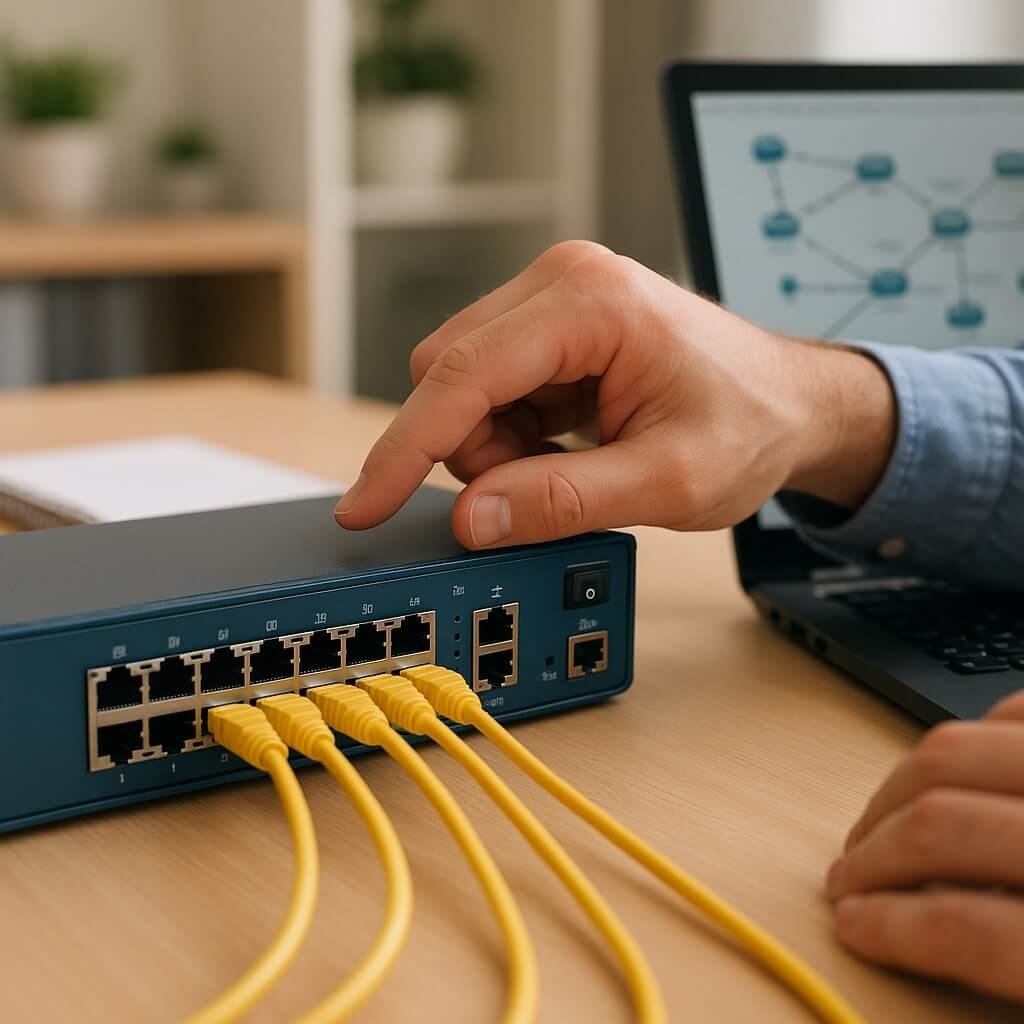

Configuring your network for enhanced security management is vital in today’s digital landscape. You need to assess your current setup to identify vulnerabilities and implement strong authentication methods. Utilizing firewalls and Intrusion Detection Systems can greatly bolster your defenses. However, merely installing these tools isn’t enough; ongoing monitoring and employee education are essential. What steps are you taking to guarantee your network remains secure against evolving threats?
Key Takeaways
- Conduct thorough network mapping to identify devices and connections, enhancing visibility for security management.
- Implement multi-factor authentication (MFA) to strengthen access controls and reduce unauthorized access risks.
- Regularly update firewall configurations and maintain intrusion detection systems to address emerging threats effectively.
- Automate patch management processes to ensure timely updates and reduce vulnerabilities across all systems.
- Develop a clear incident response plan with defined roles and communication protocols for effective threat management.
Understanding the Importance of Network Security
In today’s interconnected world, the importance of network security can’t be overstated. You need to understand that your network’s vulnerabilities can expose sensitive data and disrupt operations. Identifying these weaknesses is vital; they can range from outdated software to misconfigured devices.
Implementing robust security protocols is necessary to mitigate these risks effectively. By utilizing firewalls, intrusion detection systems, and encryption methods, you create multiple layers of defense. Regularly updating these protocols guarantees they adapt to evolving threats.
Furthermore, educating your team about security best practices can greatly reduce human error, a leading cause of breaches. Ultimately, prioritizing network security not only protects your data but also enhances your organization’s reputation and trustworthiness in the digital landscape.
Assessing Your Current Network Configuration
While evaluating your current network configuration may seem intimidating, it’s essential for identifying potential vulnerabilities and optimizing performance.
Start with a thorough network mapping to visualize all devices and connections. This will help you pinpoint weaknesses and areas needing improvement. Following this, conduct a vulnerability assessment to analyze security flaws and exposure points.
Consider these critical steps:
- Create an inventory of all network devices.
- Assess firewall configurations and rules.
- Review user access controls and permissions.
- Update software and firmware regularly.
- Document changes and maintain an audit trail.
Implementing Strong Authentication Measures
Evaluating your network configuration reveals not just vulnerabilities but also areas where authentication can be reinforced.
Implementing strong authentication measures is essential for safeguarding sensitive data. Multi-factor authentication (MFA) adds an important layer by requiring users to provide two or more verification factors, greatly reducing the risk of unauthorized access.
Consider integrating biometric verification, such as fingerprint or facial recognition, to enhance security further. These methods rely on unique physical characteristics, making it difficult for intruders to bypass.
Regularly review and update authentication protocols to adapt to evolving threats. By prioritizing these measures, you’ll fortify your network against potential breaches, ensuring that only authorized users gain access to critical systems and data.
Utilizing Firewalls and Intrusion Detection Systems
To enhance your network’s security posture, utilizing firewalls and intrusion detection systems (IDS) is essential. Firewalls act as the first line of defense, controlling incoming and outgoing traffic through robust firewall configurations.
Meanwhile, IDS monitors network activities for suspicious behaviors, allowing you to respond proactively to potential threats.
Here are critical components to take into account:
- Regularly update firewall configurations to adapt to emerging threats.
- Implement both network and host-based IDS for thorough coverage.
- Conduct routine audits to verify settings align with security policies.
- Integrate threat intelligence feeds to enhance intrusion detection capabilities.
- Train personnel on incident response protocols to improve overall security readiness.
Segmenting Your Network for Improved Control
Segmenting your network is essential for enhancing control and security, as it limits the potential impact of breaches by isolating sensitive data and critical systems.
By implementing network segmentation, you create distinct zones within your infrastructure, allowing for tailored access control measures. This strategy not only reduces the attack surface but also facilitates monitoring and compliance with regulatory requirements.
Implementing network segmentation creates distinct zones, enhancing access control and facilitating regulatory compliance while minimizing the attack surface.
Each segment can enforce specific security policies, ensuring that only authorized personnel access sensitive areas. Additionally, in the event of a breach, containment becomes more manageable, as attackers find it challenging to move laterally across segmented zones.
Ultimately, effective network segmentation strengthens your overall security posture and provides you with greater oversight of your network environment.
Regularly Updating and Patching Systems
Regularly updating and patching your systems is vital for maintaining robust network security.
Timely updates not only mitigate vulnerabilities but also guarantee compliance with industry standards.
Importance of Timely Updates
While many organizations may underestimate the importance of timely updates, neglecting to regularly update and patch systems can lead to severe vulnerabilities.
Guaranteeing a consistent update frequency is vital for effective patch management. By doing so, you can greatly reduce the risk of exploitation by cyber threats.
Here are key reasons to prioritize timely updates:
- Protects against emerging threats
- Enhances system performance and reliability
- Guarantees compliance with security standards
- Reduces downtime caused by security incidents
- Facilitates smoother integration of new features
Regularly addressing these updates not only fortifies your network but also fosters a culture of security awareness within your organization.
Don’t wait for a breach; be proactive in maintaining your system’s integrity.
Automating Patch Management Process
Automating the patch management process can greatly streamline your organization’s efforts in keeping systems updated and secure. By implementing automated updates and patch scheduling, you can minimize downtime and reduce vulnerabilities. This allows your IT team to focus on more strategic initiatives rather than manual patching.
| Task | Frequency | Tool/Method |
|---|---|---|
| OS Updates | Weekly | Windows Server Update Services (WSUS) |
| Application Patches | Monthly | Patch Management Software |
| Security Updates | Daily | Automated Scripts |
| Firmware Updates | Quarterly | Vendor-provided Tools |
| Compliance Checks | Bi-Annual | Security Auditing Tools |
Utilizing these strategies guarantees that your systems remain robust against threats while maintaining compliance with industry standards.
Encrypting Sensitive Data in Transit and at Rest
As organizations increasingly rely on digital communication and data storage, safeguarding the confidentiality and integrity of sensitive information becomes paramount.
You must implement robust data encryption practices for both data in transit and at rest. This protects sensitive information from unauthorized access and breaches. Using secure protocols like TLS for data transmission guarantees that information is securely transmitted over networks.
Consider these essential practices:
- Utilize strong encryption algorithms (e.g., AES, RSA)
- Implement end-to-end encryption for communications
- Regularly update and rotate encryption keys
- Guarantee compliance with industry standards (e.g., GDPR, HIPAA)
- Train employees on the importance of encryption
Monitoring Network Traffic for Anomalies
To effectively protect your network, monitoring traffic for anomalies is essential, as it allows you to swiftly identify potential threats and vulnerabilities.
Employing robust anomaly detection techniques, you can distinguish between normal and abnormal traffic patterns. This process involves conducting thorough traffic analysis to uncover unusual spikes, unexpected protocols, or irregular data transfers.
By leveraging advanced tools such as Intrusion Detection Systems (IDS) or Security Information and Event Management (SIEM) solutions, you gain real-time insights into your network’s behavior.
Regularly reviewing these findings helps you adapt your security measures and respond proactively to emerging threats.
Ultimately, integrating anomaly detection into your security strategy enhances your ability to safeguard critical assets and maintain overall network integrity.
Developing an Incident Response Plan
To effectively develop an incident response plan, you need to identify potential threats specific to your network environment.
Establishing clear communication protocols guarantees that all stakeholders are informed and coordinated during an incident.
Additionally, regularly updating your procedures keeps your response strategy relevant and effective against evolving threats.
Identify Potential Threats
Identifying potential threats is essential for developing an effective incident response plan, since understanding the landscape of vulnerabilities enables organizations to anticipate and mitigate risks.
By conducting a thorough vulnerability assessment, you can pinpoint areas where your network may be exposed.
Here are key aspects to contemplate:
- Malware: Identify types that target your systems.
- Phishing: Recognize tactics used to deceive employees.
- Insider Threats: Assess risks from within your organization.
- Unpatched Software: Keep track of software vulnerabilities.
- Denial-of-Service Attacks: Understand methods that disrupt services.
Establish Communication Protocols
Effective communication protocols are essential for ensuring a swift and coordinated response during a security incident. You need to establish clear communication channels that facilitate quick information sharing among your team members.
Define roles and responsibilities, so everyone knows who to contact and how to escalate issues effectively. Adhering to protocol standards, like using predefined templates for incident reporting, can streamline your response efforts.
Regular training sessions will help familiarize your team with these protocols, ensuring they know what to do when an incident arises. Implementing a centralized communication platform can also reduce confusion and enhance coordination.
Regularly Update Procedures
While developing an incident response plan, it’s essential to regularly update your procedures to reflect evolving threats and changes in your organization’s infrastructure.
Regular updates guarantee that your team remains prepared and that your defenses stay robust. Schedule routine procedure reviews to assess the effectiveness of existing protocols and introduce new techniques as necessary.
- Conduct regular risk assessments to identify new vulnerabilities.
- Update contact lists and communication protocols for incident escalation.
- Review and refine incident response roles and responsibilities.
- Incorporate lessons learned from past incidents into your procedures.
- Test your updated procedures through simulation exercises to confirm efficiency.
Educating Employees on Security Best Practices
To foster a robust security culture within an organization, it’s important to equip employees with the knowledge and skills necessary to recognize and mitigate potential threats.
Implementing thorough security training programs enhances phishing awareness, teaching staff to identify deceptive emails and links. Emphasizing password management safeguards sensitive data, while promoting device security ensures that all endpoints are protected against unauthorized access.
In today’s remote work environment, training on social engineering tactics becomes critical, as attackers often exploit personal connections. Additionally, educating employees on data privacy reinforces their role in safeguarding sensitive information.
Encourage incident reporting to address vulnerabilities promptly. Finally, instill a mindset of continuous learning, guaranteeing staff stay updated on evolving threats and best practices in security management.
Conclusion
In summary, enhancing your network security management is a multifaceted endeavor that requires ongoing vigilance and proactive measures. By regularly evaluating your configuration, implementing strong authentication, and utilizing advanced tools like firewalls and IDS, you create a robust defense against potential threats. Don’t overlook the importance of employee education and incident response planning; these elements are vital for fostering a security-conscious culture. Prioritize these strategies to safeguard your network and guarantee its resilience against evolving cyber risks.