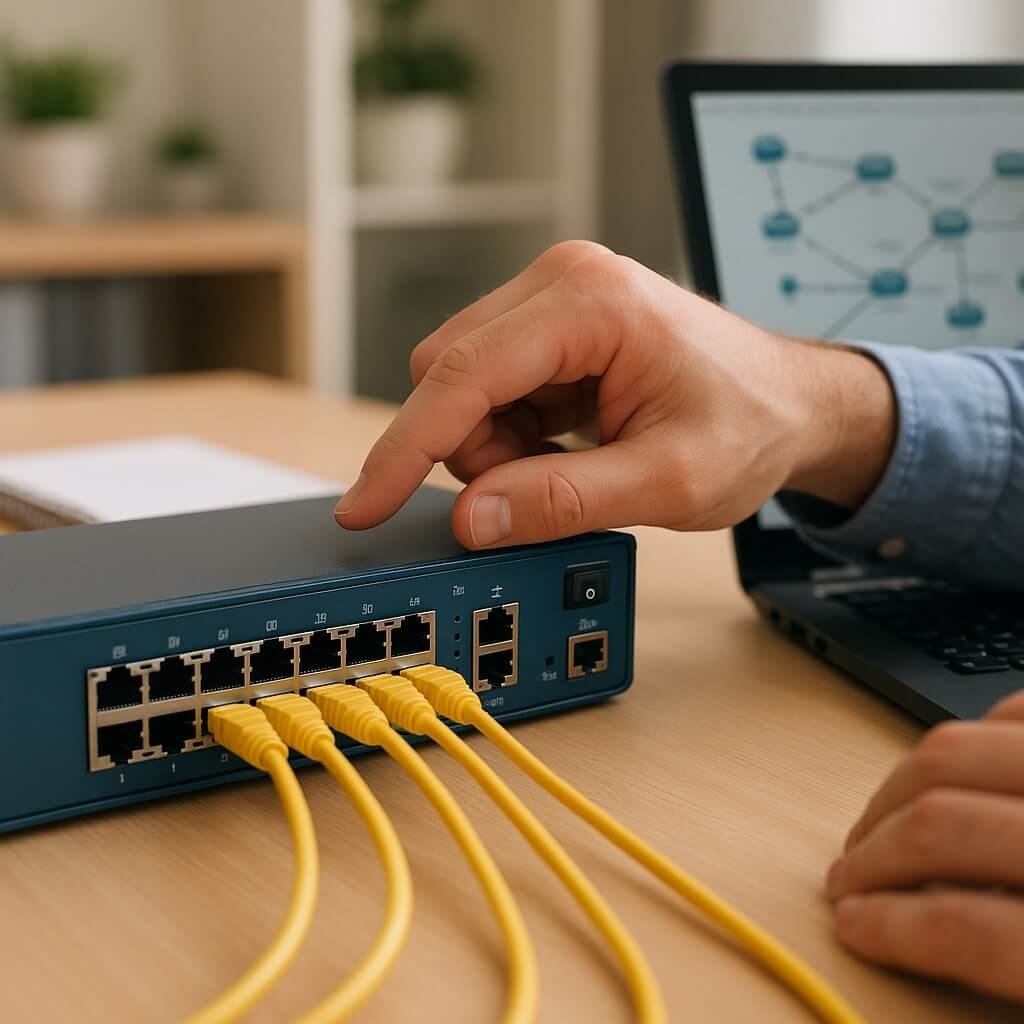
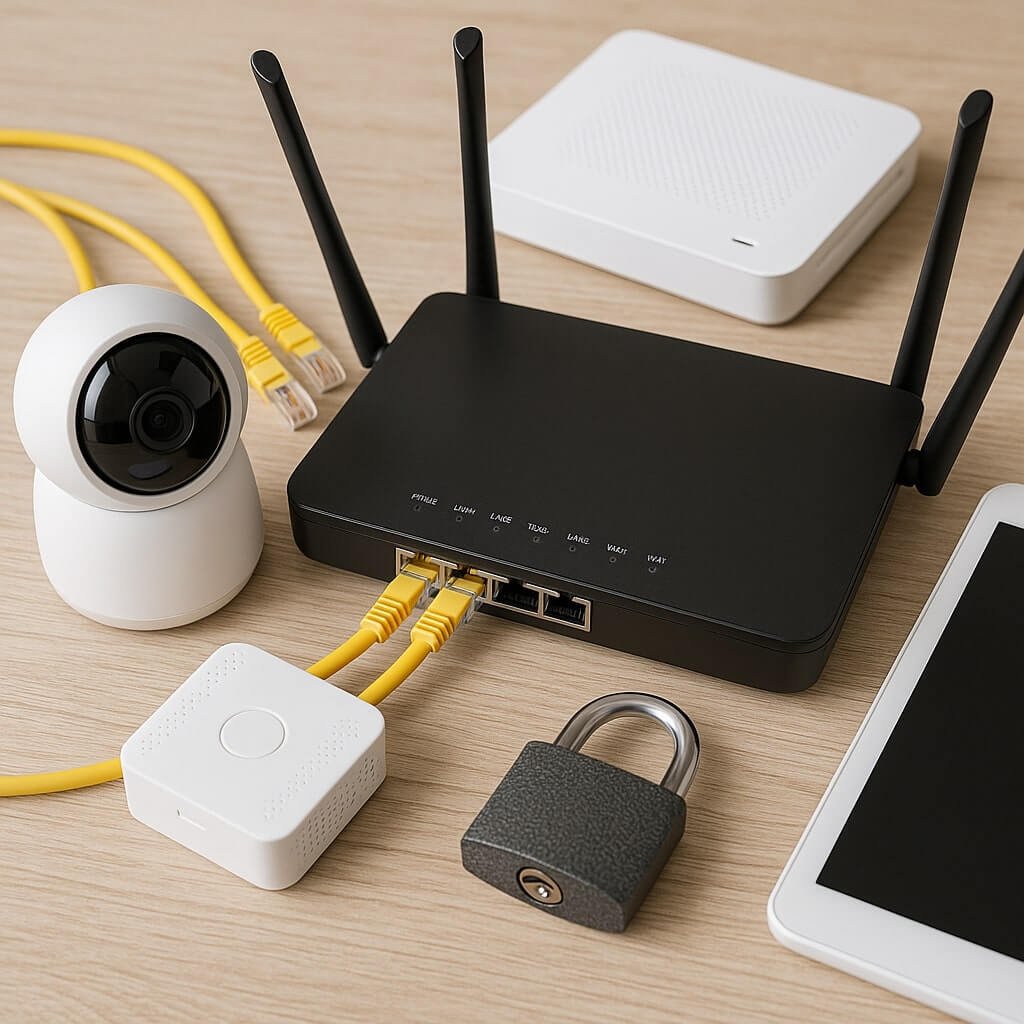
In today’s digital landscape, securing your home network is essential to protect your personal information and connected devices. You might think your default setup is sufficient, but it’s often not. By following important steps like changing your credentials and enabling WPA3 encryption, you can greatly enhance your network’s security. Let’s examine these steps closely and see how each one plays a key role in safeguarding your home network from potential threats.
Key Takeaways
- Change the default username and password to unique and strong credentials to enhance security.
- Enable WPA3 encryption for stronger protection and improved data transmission speed on your network.
- Regularly update router firmware to maintain security and efficiency, applying important patches as needed.
- Create a guest network to separate guest access and protect sensitive information on your primary network.
- Disable WPS to prevent vulnerabilities and consider using secure alternatives like manual connections or QR codes.
Change the Default Username and Password
Although it may seem tedious, changing the default username and password of your home network is a critical step in enhancing your security. Default credentials are often well-known, making your network an easy target for cybercriminals. By simply using the factory-set username, you’re compromising your username security, allowing unauthorized access to your devices.
To improve security, select a unique username and a strong password that includes a mix of letters, numbers, and symbols. Avoid using easily guessable information, like birthdays or common words.
Regularly updating these credentials is also advisable, as it adds an additional layer of protection. By taking these steps, you greatly reduce the risk of unauthorized access and protect your network from potential threats.
Enable WPA3 Encryption
To secure your home network, enabling WPA3 encryption is essential.
This advanced security protocol offers significant benefits, including enhanced protection against unauthorized access and improved performance on your devices.
In the following sections, you’ll learn how to enable WPA3 and optimize your network’s security.
Benefits of WPA3
WPA3 encryption offers significant advancements in home network security, making it essential for protecting your personal data.
Adopting WPA3 enhances your network’s integrity and provides a host of benefits that directly impact your online experience.
With WPA3, you’ll enjoy improved security against unauthorized access and better encryption methods that shield your data.
- Stronger encryption: It uses Simultaneous Authentication of Equals (SAE) for a more resilient connection.
- Faster speeds: WPA3 optimizes performance, allowing for quicker data transmission.
- Protection against brute-force attacks: It limits the risk of attackers guessing your password.
- Improved security for public networks: It offers enhanced safety even when connecting to open Wi-Fi networks.
How to Enable
Enabling WPA3 encryption on your home network is a straightforward process that greatly enhances your security.
First, access your router’s settings by entering its IP address in a web browser. Log in with your admin credentials, then navigate to the wireless security section. Here, you’ll find an option to select WPA3 as your security protocol.
Before finalizing, check for device compatibility; not all devices support WPA3 yet. If some of your devices are incompatible, consider maintaining a mixed mode (WPA2/WPA3) to guarantee connectivity.
After selecting WPA3, save your changes and restart your router. Finally, test your network connection on each device to confirm successful encryption. This guarantees a secure environment for all your online activities.
Update Router Firmware Regularly
Updating your router’s firmware regularly is essential for maintaining a secure and efficient home network. Firmware updates often include important security patches that can protect your network from vulnerabilities.
Neglecting these updates can leave your devices exposed to cyber threats, making it vital to check for updates frequently.
- Schedule automatic updates if your router supports them.
- Visit the manufacturer’s website or access your router settings to check for the latest firmware.
- Read the release notes to understand what issues the updates address.
- Back up your current settings before applying any updates to avoid configuration loss.
Create a Guest Network
Creating a guest network is a smart way to enhance your home network’s security while allowing visitors access to the internet.
By setting up a separate connection for guests, you can maintain control over your primary network and protect sensitive data. The guest network benefits include limiting access to shared files and devices, reducing the risk of malware, and preventing unauthorized usage of your bandwidth.
For guest network setup, log into your router’s admin panel, find the guest network option, and enable it.
Customize the network name and password, ensuring it’s distinct from your primary network. You can also set time limits or bandwidth restrictions to further safeguard your main connection.
This simple step can greatly bolster your network’s security.
Disable WPS (Wi-Fi Protected Setup)
Disabling WPS (Wi-Fi Protected Setup) is an essential step in securing your home network.
While WPS might seem convenient for connecting devices, it’s plagued by significant vulnerabilities that can expose your network to unauthorized access.
Hackers can exploit these weaknesses with relative ease, making it imperative to turn off this feature.
Consider these WPS alternatives for secure connections:
- Manual connection via Wi-Fi settings
- Using a QR code for quick access
- Employing NFC (Near Field Communication) technology
- Utilizing a secure password manager for easy login
Use a Strong Wi-Fi Password
With WPS turned off, the next critical step in fortifying your home network is to use a strong Wi-Fi password. A complex password greatly reduces the risk of unauthorized access. Aim for at least 12 characters, combining uppercase letters, lowercase letters, numbers, and special symbols.
This level of password complexity makes it difficult for attackers to crack your credentials through brute-force methods. It’s also essential to practice effective password management; avoid reusing passwords across different accounts.
Consider using a password manager to securely store and retrieve your passwords. Regularly update your Wi-Fi password to maintain security and mitigate potential risks.
Monitor Connected Devices
Monitoring connected devices on your home network is essential for maintaining security and performance. By implementing effective network monitoring, you can quickly identify unauthorized devices and protect your data.
Regular device identification allows you to keep track of all gadgets connected to your network, ensuring they meet your security standards.
- Use your router’s admin interface to view connected devices.
- Regularly update firmware on your router and connected devices.
- Set alerts for any unknown devices attempting to connect.
- Periodically review and remove inactive or unnecessary devices.
Conclusion
By following these seven essential steps, you can notably enhance the security of your home network. It’s imperative to take proactive measures, like changing default credentials and enabling WPA3 encryption, to protect your devices from potential threats. Regular updates and guest networks further bolster security, while disabling WPS minimizes vulnerabilities. Ultimately, a strong Wi-Fi password and device monitoring will keep your network safe and efficient, ensuring your data remains confidential and your connections secure.