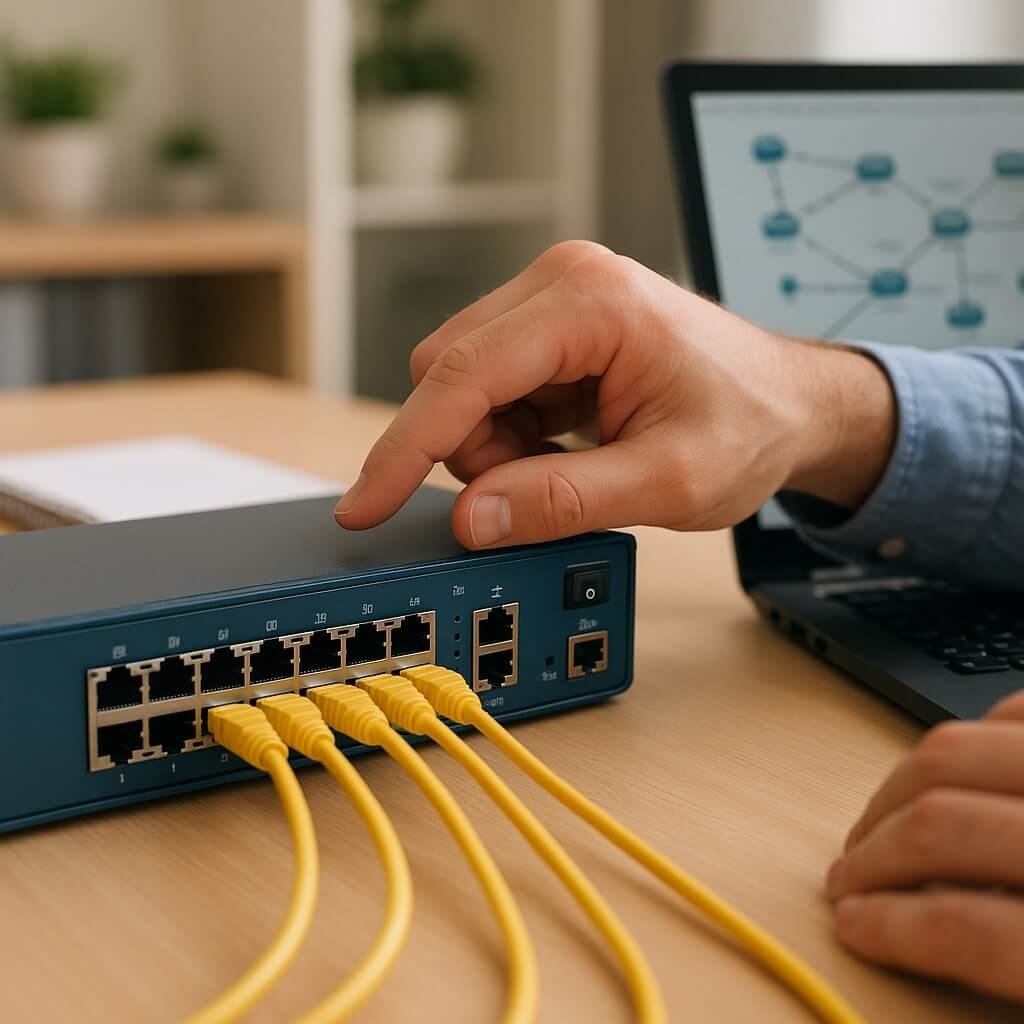
Configuring your network for effective security risk management requires a structured approach. Begin by evaluating your current security posture to identify vulnerabilities and threats. Once you have a clear picture, implementing strong access controls is essential to limit unauthorized access. Each step builds on the previous one, creating a layered defense strategy. But what specific measures should you prioritize to guarantee maximum protection? Let’s explore the critical components of a robust security framework.
Key Takeaways
- Conduct regular network vulnerability assessments to identify and address exploitable weaknesses in systems and devices.
- Implement role-based access controls and integrate multi-factor authentication to enhance user verification and minimize unauthorized access.
- Utilize network segmentation to create isolated zones for sensitive resources, reducing exposure and limiting lateral movement of cyber threats.
- Establish a comprehensive incident response plan and regularly test it to effectively manage and mitigate security incidents.
- Keep security protocols updated by applying patches and aligning them with the latest industry standards to maintain compliance and network integrity.
Assessing Your Current Network Security Posture
To effectively manage network security risks, you first need to assess your current network security posture.
Start with a thorough network vulnerability assessment to identify weaknesses and potential threats within your infrastructure. This assessment involves scanning your systems, applications, and devices for vulnerabilities that could be exploited by attackers.
Simultaneously, conduct a security posture evaluation to analyze your existing security controls and policies. This evaluation helps you understand how well your defenses align with industry standards and best practices.
Implementing Strong Access Controls
After identifying vulnerabilities and evaluating your security posture, it’s essential to implement strong access controls to further safeguard your network.
Start by adopting role-based access, ensuring users receive permissions strictly aligned with their job functions. This minimizes the risk of unauthorized access and limits potential damage from compromised accounts.
Additionally, integrate multi-factor authentication (MFA) for an extra layer of security. MFA requires users to verify their identity through multiple methods, such as a password and a temporary code sent to their mobile device.
By combining role-based access with MFA, you can greatly enhance your network’s defense against breaches.
Regularly review access rights and authentication methods to adapt to any changes in your organization’s structure or security landscape.
Regularly Updating Security Protocols
Regularly updating your security protocols is essential for maintaining an effective defense against evolving threats.
You should schedule routine reviews to guarantee that your protocols align with the latest industry standards and vulnerabilities.
Importance of Updates
Although many organizations recognize the necessity of robust security protocols, the importance of regularly updating these measures often gets overlooked.
Consistent updates are essential for maintaining the integrity of your network security. Here’s why you should prioritize update frequency:
- Mitigating Vulnerabilities: Security patches address known weaknesses, reducing the risk of exploitation by attackers.
- Enhancing System Performance: Updates often come with optimizations that improve overall system efficiency and reliability.
- Compliance Requirements: Many industry standards mandate timely updates, ensuring your organization remains compliant with regulations.
Scheduling Regular Reviews
To guarantee your network security protocols remain effective, scheduling regular reviews is essential. Establishing an appropriate review frequency—whether quarterly or biannually—ensures that you’re consistently evaluating your security measures.
During these reviews, employ diverse review methodologies, including penetration testing and vulnerability assessments, to identify gaps in your defenses. This critical analysis not only uncovers potential weaknesses but also validates the effectiveness of recent updates.
Document findings meticulously and adjust your protocols accordingly, fostering a proactive security posture. By systematically reviewing your network’s security, you’re better equipped to adapt to emerging threats, ensuring that your defenses evolve alongside the changing landscape of cyber risks.
Regular reviews aren’t just a best practice; they’re a necessity for robust security management.
Utilizing Network Segmentation
How can effective network segmentation enhance your organization’s security posture? By implementing network segmentation, you create distinct network zones that isolate sensitive resources and improve traffic control. This practice reduces the attack surface and limits potential lateral movement by cyber threats.
Here are three key benefits:
- Enhanced Security: Isolating critical systems minimizes exposure to vulnerabilities.
- Improved Performance: Segmenting traffic reduces congestion, optimizing bandwidth for essential applications.
- Simplified Compliance: Clearly defined zones facilitate adherence to regulatory requirements by controlling access to sensitive data.
Utilizing network segmentation not only fortifies your defenses but also streamlines your network management.
Monitoring and Responding to Security Incidents
Effective monitoring and responding to security incidents are essential for maintaining an organization’s resilience against cyber threats. You need to implement robust threat detection mechanisms to identify anomalies in real time.
Utilize security information and event management (SIEM) systems to aggregate logs and alert you to potential breaches. Establish a well-defined incident response plan that outlines roles, responsibilities, and procedures for containment, eradication, and recovery.
Regularly test your incident response capabilities through simulations, ensuring your team is prepared for actual incidents. Continuous improvement of your response strategies is vital; analyze past incidents to refine detection techniques and response protocols.
Educating Employees on Security Best Practices
Following incident response, fostering a culture of security awareness among employees is essential for bolstering your organization’s defenses.
You need to implement a thorough approach to educate your team effectively. Here are three key strategies:
- Regular Security Awareness Training: Conduct sessions that cover the latest threats and best practices, ensuring employees stay informed and vigilant.
- Phishing Training Simulations: Use real-world scenarios to simulate phishing attacks, helping employees recognize and respond appropriately to suspicious emails.
- Clear Communication Channels: Establish a protocol for reporting potential security threats, promoting a proactive mindset across your organization.
Conclusion
By systematically evaluating your network security posture and implementing strong access controls, you greatly reduce vulnerabilities. Regular updates to security protocols, along with effective network segmentation, further fortify your defenses. Coupled with robust monitoring systems and an agile incident response plan, you can swiftly address any security threats. Don’t overlook the importance of educating your employees on security best practices, as their awareness is crucial in maintaining a secure network environment and mitigating potential risks.