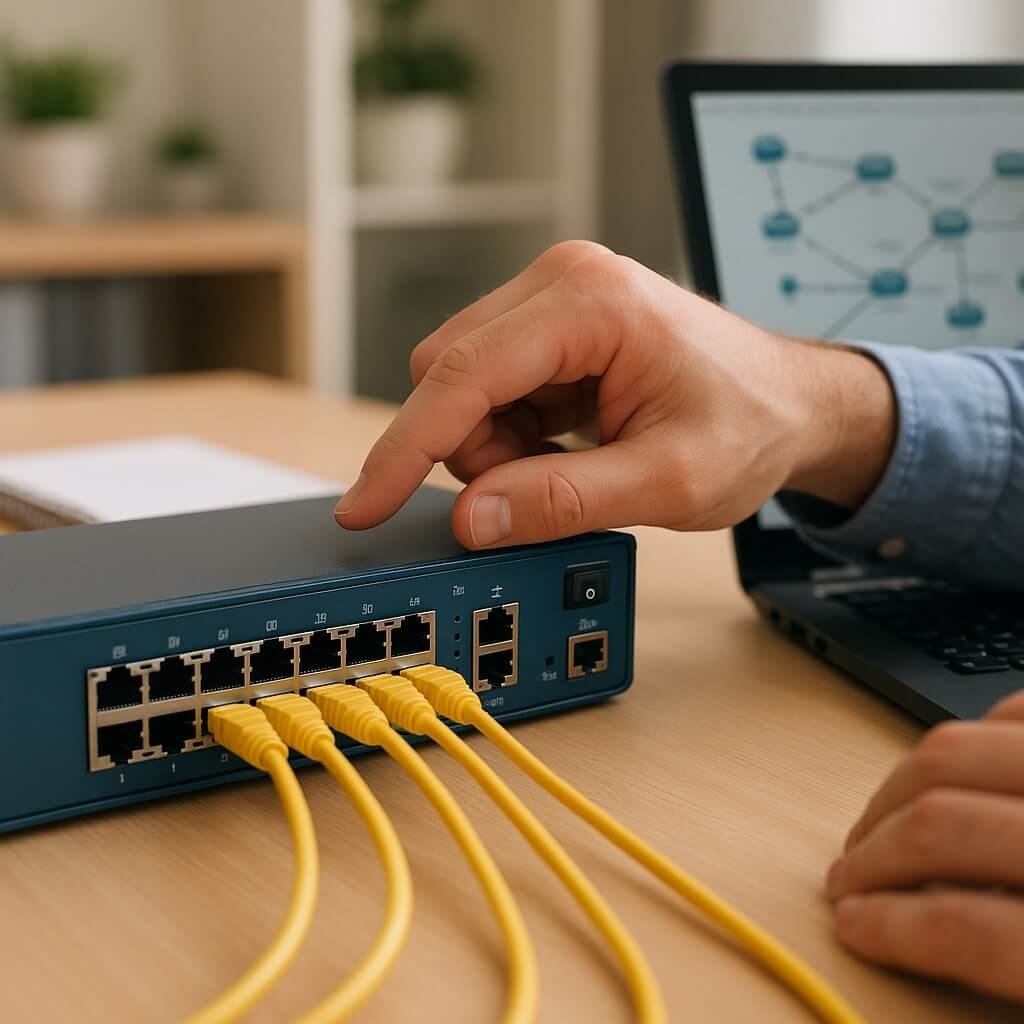
Configuring your network for effective Security Operations Management requires a methodical approach. You’ll start by evaluating your current infrastructure and identifying vulnerabilities. Next, you’ll define specific security goals that align with your organization’s objectives. This foundational work sets the stage for implementing strategies like network segmentation and deploying monitoring tools. Understanding these steps is vital, as they form the backbone of a robust security posture. What comes next is perhaps the most critical phase.
Key Takeaways
- Conduct thorough infrastructure mapping to identify devices, connections, and endpoints for a clear understanding of the network layout.
- Define security operations management goals aligned with organizational objectives by assessing risks and developing targeted strategies.
- Implement network segmentation by identifying critical assets and establishing zones with strict access controls for enhanced security.
- Deploy security monitoring tools that are scalable, integrable, and capable of real-time analysis to detect threats promptly.
- Establish clear incident response procedures with defined roles and communication protocols to ensure effective incident management and reporting.
Assessing Your Current Network Infrastructure
How well do you really understand your network infrastructure? A thorough network evaluation is essential for identifying vulnerabilities and optimizing performance.
Start by conducting an infrastructure mapping exercise, detailing every device, connection, and endpoint in your network. This visual representation helps you to comprehend how data flows and identifies potential bottlenecks or points of failure.
Next, assess the performance metrics of your network components. Are they functioning within expected parameters? Analyze traffic patterns to spot anomalies that might indicate security weaknesses.
Defining Security Operations Management Goals
While establishing effective security operations management goals might seem challenging, it’s essential for safeguarding your network. Begin by confirming goal alignment with your organization’s overall objectives. This requires a thorough risk assessment to identify vulnerabilities and potential threats. By doing so, you can develop targeted goals that directly address these risks.
Here’s a simple framework for defining your goals:
| Goal Type | Description | Key Metrics |
|---|---|---|
| Compliance | Confirm adherence to regulations | Audit success rate |
| Incident Response | Minimize impact of security events | Response time |
| Continuous Improvement | Enhance security measures | Training frequency |
Utilizing this table can streamline your goal-setting process and create a strong foundation for effective security operations management.
Implementing Network Segmentation
Achieving your security operations management goals sets the stage for implementing effective network segmentation. This process enhances your security posture by creating distinct network zones, limiting potential attack surfaces, and facilitating traffic filtering.
Here’s how to implement segmentation effectively:
- Identify Critical Assets: Determine which systems and data require the highest level of protection.
- Define Network Zones: Categorize your network into segments, such as user, server, and management zones.
- Establish Access Controls: Implement strict policies governing access between zones, ensuring minimal exposure.
- Monitor and Adjust: Continuously analyze traffic patterns and adjust segmentation as necessary to optimize security.
Deploying Security Monitoring Tools
When deploying security monitoring tools, you need to select options that align with your network architecture and threat landscape.
Consider implementation best practices to guarantee these tools effectively integrate without disrupting operations.
This strategic approach enhances your organization’s overall security posture.
Selecting Appropriate Tools
Selecting the right security monitoring tools is essential for effective network defense, as they serve as the backbone of your cybersecurity strategy.
To guarantee you make informed choices, conduct thorough tool evaluations and feature comparisons. Here are four key considerations:
- Scalability: Ensure the tool can grow with your network.
- Integration: Check if it seamlessly integrates with existing systems.
- Real-time Analysis: Look for tools that provide immediate insights into threats.
- User-friendliness: Choose tools with intuitive interfaces for easier management.
Implementation Best Practices
Successfully deploying security monitoring tools requires careful planning and execution to guarantee maximum effectiveness.
Start by aligning your tools with your organization’s security policy, confirming they address identified vulnerabilities. Conduct a thorough risk assessment to determine the specific threats your network faces, which will guide your tool selection and configuration.
Implement monitoring solutions that provide real-time visibility and alerting for anomalies, verifying they integrate seamlessly with existing infrastructure. Regularly update and patch these tools to maintain their efficacy against emerging threats.
Additionally, establish clear protocols for incident response to optimize tool functionality during security events.
Finally, continuously review and refine your deployment strategy based on evolving risks and performance metrics to confirm ongoing security posture enhancement.
Establishing Incident Response Procedures
To effectively manage security incidents, you need to define clear roles within your incident response team.
Establishing communication protocols will guarantee that all stakeholders are informed and can act swiftly.
Define Incident Response Roles
Defining incident response roles is essential for establishing effective incident response procedures within an organization.
Clearly delineating the responsibilities of incident response teams enhances coordination and efficiency during an incident. You should consider the following key roles:
- Incident Commander: Oversees the response efforts and guarantees effective communication among team members.
- Security Analyst: Analyzes threats and gathers intelligence to inform the response strategy.
- Forensic Specialist: Collects and preserves evidence for investigations and guarantees compliance with legal standards.
- Communications Officer: Manages internal and external communications, guaranteeing accurate information dissemination.
Develop Communication Protocols
While establishing incident response procedures, developing effective communication protocols is critical to guarantee timely and accurate information flow during a security incident. You should define communication standards that dictate how information is shared among team members and external stakeholders. Focus on protocol layers that enhance clarity and reduce confusion.
Here’s a table to illustrate key communication components:
| Component | Description |
|---|---|
| Incident Reporting | Method for reporting incidents quickly |
| Stakeholder Alerts | System for notifying relevant parties |
| Status Updates | Regular updates on incident progress |
| Documentation | Recording of actions taken and decisions |
| Post-Incident Review | Analyzing communication effectiveness |
Regularly Reviewing and Updating Security Protocols
Regular reviews and updates of security protocols are essential for maintaining an effective defense against evolving threats.
To guarantee your network remains secure, follow these steps:
- Conduct Security Audits: Regularly assess your current security posture to identify vulnerabilities and areas for improvement.
- Implement Protocol Updates: Stay informed about the latest security trends and update your protocols accordingly to mitigate new risks.
- Review Incident Response Plans: Evaluate your response strategies after incidents to enhance your preparedness for future threats.
- Train Staff Regularly: Conduct ongoing training sessions to ensure all employees understand the latest security protocols and their roles in maintaining security.
Conclusion
To summarize, configuring your network for effective Security Operations Management requires a systematic approach. By evaluating your current infrastructure, defining clear security goals, implementing network segmentation, deploying robust monitoring tools, and establishing incident response procedures, you create a resilient security framework. Regularly reviewing and updating your protocols guarantees that your defenses evolve alongside emerging threats, ultimately enhancing your organization’s security posture and operational efficiency. Prioritizing these steps will position your network to effectively combat potential vulnerabilities.