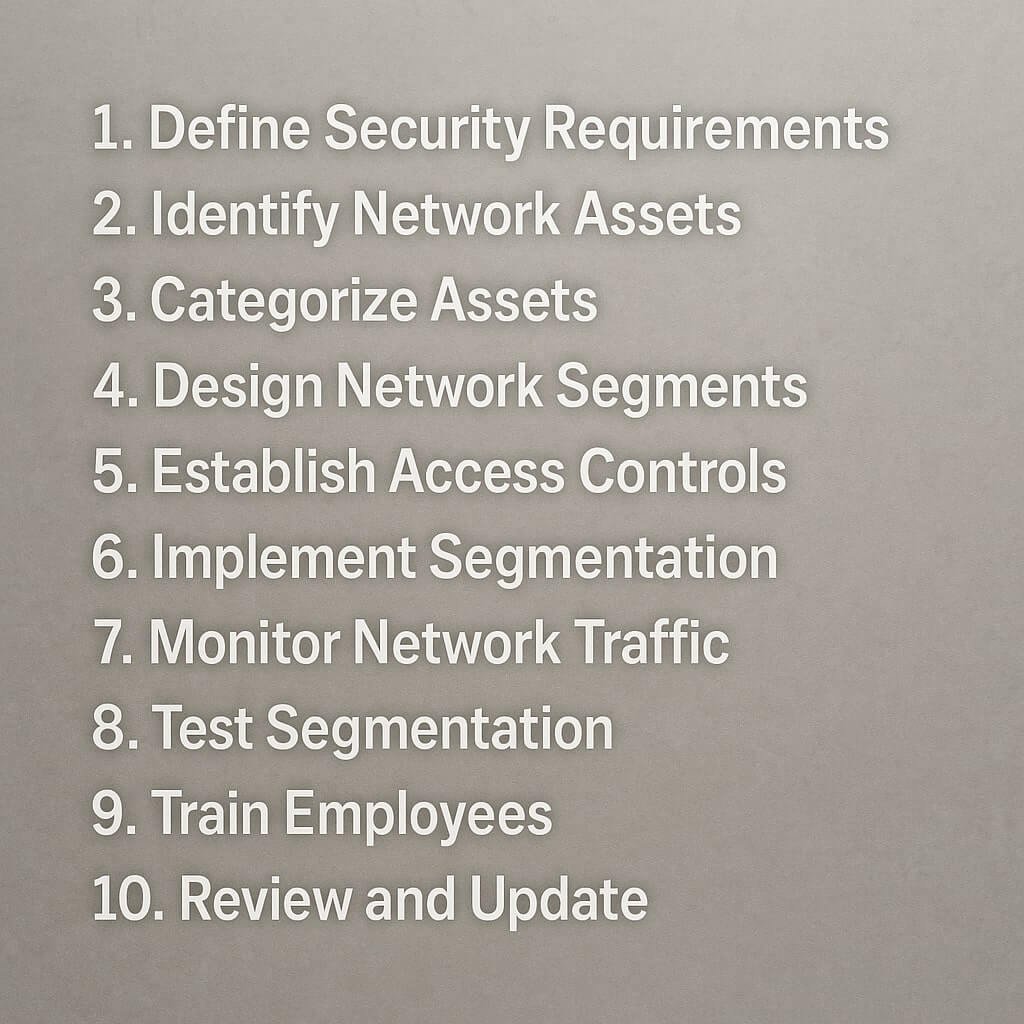
Implementing network segmentation is vital for bolstering your security posture. By evaluating your current architecture and identifying vulnerabilities, you can take significant steps toward protecting sensitive data. Establishing clear security policies and access controls is essential, but selecting the right segmentation method can be complex. As you move forward, understanding the ongoing requirements for monitoring and employee training will be just as important. Let’s explore how these ten steps can enhance your network security strategy.
Key Takeaways
- Assess current network architecture to identify vulnerabilities and segment based on function or sensitivity levels for enhanced security.
- Classify sensitive data and create an asset inventory to establish appropriate segmentation boundaries.
- Define clear security policies and access controls, utilizing multi-factor authentication and role-based access.
- Implement VLANs and configure firewalls to enforce strict access controls between segments while monitoring traffic for anomalies.
- Regularly test and evaluate segmentation effectiveness through metrics and penetration testing to ensure ongoing security and compliance.
Assess Your Current Network Architecture
Before you can effectively implement network segmentation, you need to evaluate your current network architecture. Start with current network mapping to visualize your existing setup, identifying all devices, connections, and data flows.
This mapping will serve as a foundation for your architecture review, allowing you to pinpoint vulnerabilities and inefficiencies. Analyze traffic patterns to understand how data moves across your network and where potential bottlenecks or security gaps may exist.
During this review, consider the overall layout and segment it logically based on function or sensitivity levels. By thoroughly evaluating your network architecture, you’ll set a solid groundwork for segmentation, enhancing security and performance while minimizing risks to your organization’s data integrity.
Identify Sensitive Data and Assets
Identifying sensitive data and assets is essential for effective network segmentation. Start by conducting a thorough data classification, categorizing information based on sensitivity and criticality.
Identifying sensitive data and assets is crucial for successful network segmentation through thorough data classification.
Next, create an asset inventory that lists all devices, applications, and data repositories within your network. This inventory should include details on ownership and location.
Perform a risk assessment to identify vulnerabilities associated with each asset, considering potential threats and impacts. Make certain you understand compliance requirements relevant to your industry, as these will inform your segmentation strategy.
Finally, map out data flow within your network to pinpoint where sensitive data traverses, helping you to establish appropriate boundaries for segmentation that enhance security while maintaining operational efficiency.
Define Security Policies and Access Controls
To guarantee effective network segmentation, you need to define clear security policies and access controls that govern how data and resources are accessed and used. Establishing these frameworks guarantees that only authorized users can interact with sensitive information, reducing the risk of data breaches.
| Security Policy | Description | Access Control Mechanism |
|---|---|---|
| User Authentication | Validate user identities | Multi-factor authentication |
| Role-Based Access | Limit access based on user roles | Role assignment |
| Data Encryption | Protect data in transit and at rest | Encryption protocols |
| Audit Logging | Track access and modifications | Log analysis tools |
Choose the Right Segmentation Method
When choosing the right segmentation method, you need to align it with your business requirements, security needs, and existing network architecture.
Analyzing these factors will help you implement a strategy that maximizes security while maintaining operational efficiency.
Prioritizing these elements guarantees that your network segmentation effectively mitigates risks.
Understand Business Requirements
How do you determine the most effective segmentation method for your organization? Start by aligning your segmentation strategy with your business goals.
Identify the regulatory compliance requirements that apply to your industry, as this can dictate specific segmentation needs. Conduct a thorough risk assessment to understand potential impacts on your network and data.
Involve stakeholders throughout this process to gather diverse insights and guarantee buy-in. Consider how different segmentation methods will affect resource allocation, including personnel and technology investments.
This analytical approach helps you choose a method that addresses security needs while supporting operational efficiency. Ultimately, your segmentation strategy should enhance security without hindering business objectives, creating a balance between protection and functionality.
Evaluate Security Needs
Which segmentation method best aligns with your security needs? To determine this, conduct a thorough risk assessment and consider your compliance requirements.
The right choice can greatly mitigate vulnerabilities and enhance your network’s overall security posture. Here are four key factors to evaluate:
- Data Sensitivity: Identify which data requires stringent protections.
- User Access Levels: Assess who needs access to specific network segments.
- Regulatory Compliance: Confirm alignment with industry standards and regulations.
- Threat Landscape: Analyze potential threats that could exploit your network’s weaknesses.
Consider Network Architecture
As you evaluate your network architecture, choosing the right segmentation method is essential for optimizing security and performance.
Consider the different architecture types—flat, hierarchical, and hybrid—as each influences how you implement segmentation. A flat design may seem simpler, but it often lacks the necessary security layers, making it vulnerable to attacks.
Hierarchical designs, on the other hand, enable better control and isolation between segments, enhancing your security posture. Assess your network design to determine which method aligns with your operational needs and security goals.
By selecting the appropriate segmentation strategy, you can effectively minimize the attack surface while improving overall network efficiency.
Prioritize your architecture type to guarantee robust and scalable segmentation.
Implement VLANs for Logical Segmentation
Implementing VLANs (Virtual Local Area Networks) is an essential step in achieving logical segmentation within your network. By creating separate broadcast domains, you can enhance security and reduce congestion.
However, while VLANs offer significant benefits, they also present certain challenges.
Here are key considerations:
- Enhanced Security: Isolate sensitive data, reducing the risk of unauthorized access.
- Improved Performance: Minimize broadcast traffic, leading to better overall network efficiency.
- Flexibility: Easily modify and scale your network as needs change.
- Complexity: Managing VLAN configurations can be challenging and requires careful planning.
Use Firewalls to Enforce Segmentation
To effectively enforce network segmentation, you’ll need to configure firewalls with best practices in mind.
This includes setting rules that limit traffic between segments and ensuring proper monitoring and logging to detect anomalies.
Firewall Configuration Best Practices
While firewalls are essential for network security, their effectiveness hinges on proper configuration to enforce segmentation.
You need to follow best practices to optimize your firewall’s role in protecting your network. Here are four key steps:
- Choose the right firewall types: Utilize next-generation firewalls for advanced security features.
- Implement strict access controls: Limit traffic to only what’s necessary by defining clear security protocols.
- Regularly update firewall rules: Adapt to emerging threats and vulnerabilities to maintain robust defenses.
- Conduct periodic reviews: Assess configurations to guarantee alignment with your segmentation strategy.
Monitoring and Logging Traffic
Although firewalls play an essential role in enforcing network segmentation, effective monitoring and logging of traffic are equally important for maintaining security.
By implementing robust traffic analysis tools, you can gain insights into data flows between segments. This allows you to identify unusual patterns that may indicate potential threats. Regularly review logs to verify compliance with your segmentation policies and to detect any unauthorized access attempts.
Utilizing data visualization techniques can further enhance your understanding of traffic patterns, making it easier to spot anomalies.
Integrating these practices with your firewall configuration creates a thorough security posture. Remember, proactive monitoring and timely responses are key to safeguarding your segmented network and mitigating risks effectively.
Monitor and Analyze Network Traffic
Monitoring and analyzing network traffic is essential for identifying potential threats and ensuring robust security within segmented environments.
By employing effective network traffic analysis, you can gain valuable insights into your network’s behavior and spot anomalies that could indicate security breaches.
Here are four key reasons to prioritize this task:
- Early Threat Detection: Spot potential intrusions before they escalate.
- Performance Optimization: Identify bottlenecks and improve overall network efficiency.
- Regulatory Compliance: Meet industry standards and avoid hefty fines.
- Incident Response: Quickly respond to identified threats, minimizing damage.
With effective traffic anomaly detection, you’ll strengthen your network’s defenses and maintain a secure operational environment.
Stay vigilant and proactive to safeguard your assets.
Regularly Update and Patch Systems
To maintain a strong security posture, regularly updating and patching systems is essential. System updates address vulnerabilities that cybercriminals exploit, so staying current helps mitigate risks.
Implementing a robust patch management strategy guarantees that all software, including operating systems and applications, receives timely updates. Prioritize critical patches that fix severe security flaws and establish a routine for evaluating and applying updates.
This proactive approach minimizes potential attack vectors in your network segmentation. Additionally, automate the patch management process wherever possible to reduce human error and administrative overhead.
Educate Employees on Security Best Practices
As cyber threats evolve, it’s essential that employees understand security best practices to protect the organization’s assets.
Implementing robust employee training programs enhances security awareness, ensuring everyone plays their part in safeguarding sensitive information.
Here are four critical areas to focus on:
- Phishing Recognition: Train employees to identify suspicious emails and links.
- Password Management: Encourage the use of strong, unique passwords and regular updates.
- Data Handling: Teach safe methods for storing and sharing sensitive data.
- Incident Reporting: Instill a culture of prompt reporting for any potential security breaches.
Test and Evaluate Segmentation Effectiveness
Testing and evaluating the effectiveness of network segmentation is essential for guaranteeing your security measures work as intended. Start by utilizing segmentation tools to monitor traffic flow between segmented networks. Analyze the data to identify any unauthorized access or unusual patterns that could indicate a breach.
Next, establish effectiveness metrics such as incident response times, the number of detected threats, and the overall reduction in risk exposure. Regularly review these metrics to assess whether your segmentation strategy needs adjustments.
Additionally, conduct penetration testing to simulate attacks and evaluate your network’s resilience. By continuously testing and refining your segmentation approach, you’ll enhance your organization’s security posture and guarantee your defenses remain robust against evolving threats.
Conclusion
By following these ten steps, you can considerably enhance your network security through effective segmentation. Evaluating your architecture, classifying assets, and defining policies set a strong foundation. Implementing VLANs and continuously monitoring traffic will help maintain security. Don’t forget to keep your systems updated and educate your employees on best practices. Regular testing of your segmentation strategy guarantees its effectiveness, enabling you to proactively address vulnerabilities and adapt to new threats in your network environment.